

GET A FREE QUOTE
For landlords and property managers, a Fire Risk Assessment (FRA) report can often feel like a descent into a bureaucratic nightmare. When an inspector marks a door as “non-compliant” with vague notes like “excessive gaps” or “incorrect ironmongery,” the path to compliance can seem both expensive and opaque. This technical deep dive explores the stringent regulatory landscape of UK fire door safety, focusing on the standards that govern your legal obligations and the expert precision required to meet them.
Key Takeaways
- Legal Necessity: Compliance with the Fire Safety Act 2021 and Regulation 10 is a non-negotiable legal duty for “Responsible Persons.”
- Regulatory Framework: BS 8214 and BS 476 are the benchmarks for fire door installation and testing in the UK.
- Technical Precision: Compliance hinges on millimetre-perfect measurements, from 3mm gaps to certified self-closing forces.
- HMO Focus: Multi-occupied properties face the highest level of scrutiny, requiring specialized HMO fire door upgrades.
- Expert Remediation: A failed FRA requires an expert decoder to translate report findings into physical, certified safety.
Table of Contents
- The Legal Stakes of Non-Compliance
- Decoding Your FRA Report: The Inspector’s Nightmare
- The Elite Solution: Repair vs. Replace
- HMO Investor Preparation: Compliance Before Occupation
- Our Certification & Technical Process
- Frequently Asked Questions
- Conclusion
1. The Legal Stakes of Non-Compliance
The UK’s fire safety landscape has shifted dramatically following the Fire Safety Act 2021 and the Fire Safety (England) Regulations 2022 (specifically Regulation 10). For landlords and “Responsible Persons,” the ambiguity regarding flat entrance doors has been removed: you are legally accountable for the fire doors in your building.
Regulation 10 mandates that in buildings over 11 metres, flat entrance doors must be inspected annually, while communal fire doors require quarterly checks. Failure to adhere to these standards is not merely a minor oversight; it is a significant legal liability. Enforcement authorities have the power to issue prohibition notices, heavy fines, and in cases of extreme negligence, pursue criminal prosecutions.
The Fire Safety Act 2021 explicitly includes the building’s structure and external walls, alongside flat entrance doors, within the scope of the Fire Safety Order. This means that every Fire Door Installation must be backed by documentary evidence that it meets BS 476-22 or BS EN 1634-1 testing standards. In the eyes of the law, ignorance of a door’s failure is no defence.

2. Decoding Your FRA Report: The Inspector’s Nightmare
Many property managers find themselves staring at a Fire Risk Assessment report that lists dozen of failures without providing a clear roadmap for rectification. A report might state: “Communal door 04 fails to meet BS 8214 standards.”
But what does that actually mean?
At Elite Fire Door Installations, we act as the “expert decoders.” We translate these vague inspector reports into physical action plans. A failure could be caused by anything from a worn-down intumescent strip to a self-closer that lacks the necessary Newton force to latch the door against its seals. We take the “Nightmare Series” of failed reports and provide FRA Remediation that restores total compliance and peace of mind.
3. The Elite Solution: Repair vs. Replace
One of the greatest misconceptions in the industry is that a failing fire door must always be replaced. Full replacement is costly, disruptive, and often unnecessary. We specialise in a more nuanced approach.
We evaluate every failing door to determine if it can be physically repaired, re-lipped, or upgraded to meet current standards. By using specialized tools like intumescent seal routers and fire-rated timber, we can often perform a Fire Door Repair that saves landlords significant capital while maintaining the “Golden Thread” of safety documentation. However, this is strictly a job for certified professionals; any uncertified modification to a fire door instantly invalidates its rating and places the property at risk.

4. HMO Investor Preparation: Compliance Before Occupation
For property investors entering the Houses in Multiple Occupation (HMO) market, fire safety is often the largest technical hurdle. To pass initial licensing inspections and secure an HMO license, fire doors must be perfect.
Investors must factor HMO fire door upgrades into their initial renovation budgets. This includes:
- Ensuring every bedroom and kitchen door is a certified FD30S (fire and smoke resistant) unit.
- Verifying that frames are compatible with the door leaves.
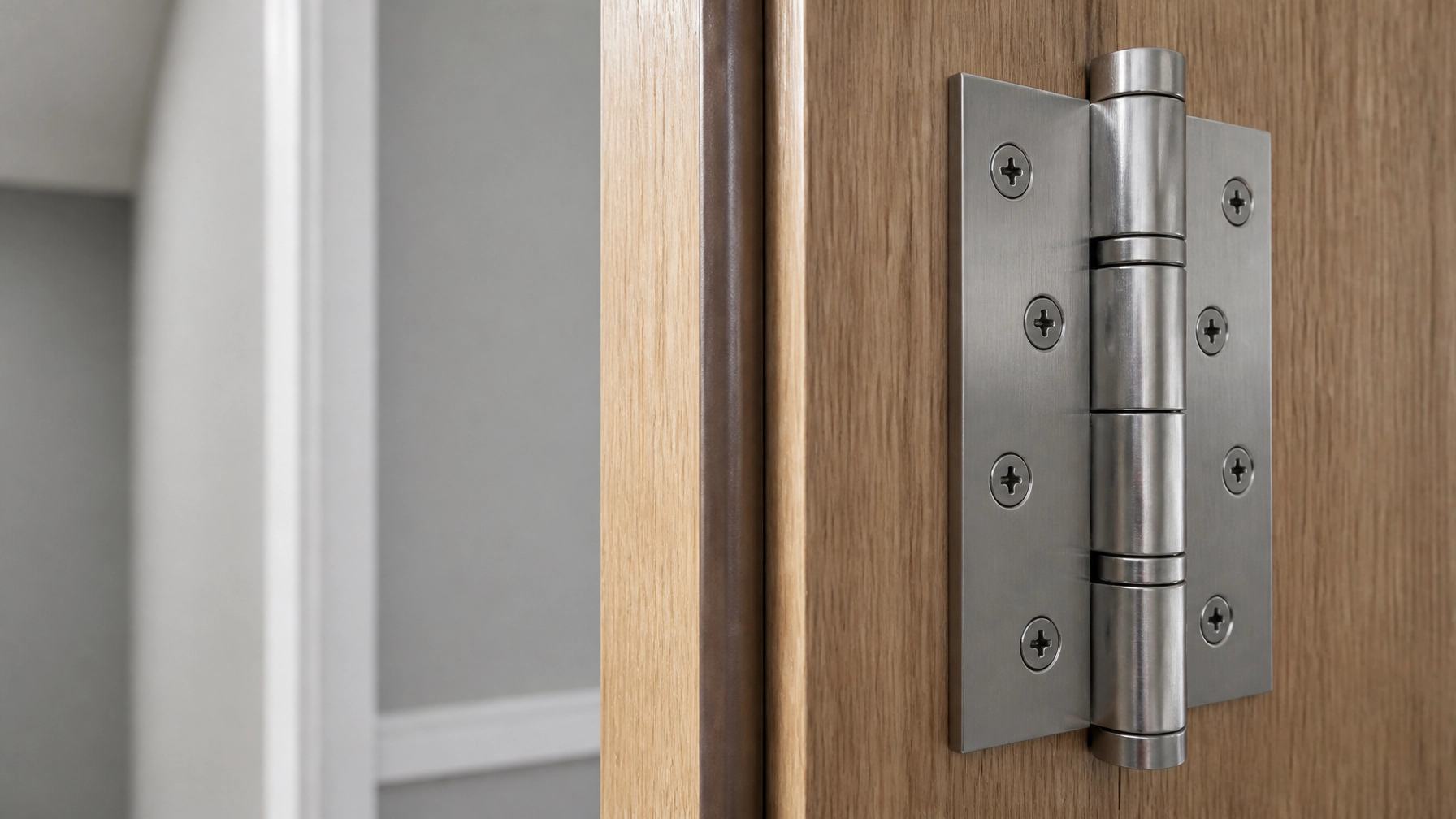
- Installing Grade 13 hinges and BS EN 1154 compliant closers from the outset.
Buying a property to convert into an HMO requires a proactive Fire Door Survey for Quotations during the due diligence phase. Waiting until an inspector finds a failure during the licensing visit can delay rental income by months.
5. Our Certification & Technical Process
At Elite Fire Door Installations, our process is defined by expert precision and adherence to BS 8214. We don’t just “fix” doors; we certify safety.
- Survey: We conduct detailed Fire Door Surveys for Quotations to identify every point of failure.
- Fixed-Price Quoting: We provide transparent costs for all necessary remediation.
- Certified Execution: Our installers work to FireQual standards, using precision UK-standard tools:
- Fire Door Gap Gauges: Ensuring the critical 2mm-4mm gap (ideally 3mm) is consistent across the entire frame.
- Intumescent Seal Routers: For precision grooving to accommodate new seals.
- Hinge Jigs: To ensure BS EN 1935 hinges are perfectly recessed and load-bearing.
- Force Gauges: To guarantee compliance with BS 8300 for opening and closing forces.
- Compliance Handover: We provide the full suite of compliance documentation required by local authorities and insurance providers.

6. Frequently Asked Questions
Q1: Can I just add a self-closer to a standard door to make it a fire door?
No. A fire door is a tested assembly. Adding fire-rated hardware to a non-fire-rated door does not grant it fire resistance. A certified Fire Door Installation requires a leaf and frame that have been tested together to BS 476-22 standards.
Q2: What is the maximum allowable gap at the bottom of a fire door?
Under BS 8214, the threshold gap should generally not exceed 10mm. However, if the door is required to provide smoke control (FD30S), the gap must be restricted, often requiring the installation of a drop seal or a threshold plate.
Q3: How often do HMO fire doors need to be inspected by a professional?
While Regulation 10 mandates quarterly and annual checks, the “Responsible Person” should ensure that a competent professional conducts a formal Fire Door Survey at least once a year, or more frequently in high-traffic environments where wear and tear is accelerated.
Q4: Can intumescent seals be painted over?
Never. Painting over intumescent seals can prevent them from expanding correctly in the event of a fire, effectively nullifying the door’s fire rating. If seals are painted or damaged, they must be replaced by a certified installer.
Q5: Why is the “Golden Thread” of information important for landlords?
The Golden Thread refers to the digital record of a building’s safety information. Having documented proof of every Fire Door Repair and installation ensures that you can prove compliance to inspectors, insurers, and the Fire and Rescue Service at any time.

7. Conclusion
Navigating the complexities of UK fire door regulations is a demanding task that requires more than just a general understanding of building work. From the technical nuances of BS 8214 to the legal mandates of Regulation 10, the stakes for landlords and property managers have never been higher. By choosing Elite Fire Door Installations, you are not just hiring a contractor; you are partnering with certified experts who understand how to decode the most challenging FRA reports and restore safety to your property with absolute precision.
For expert assistance with your property compliance, contact our team today:
- Email: info@elitefiredoorinstallations.co.uk
- Specialist Support: +44 7514 898517
- Request a call back: +44 20 4511 9456
- Website: https://elitefiredoorinstallations.co.uk
Leave a Reply