

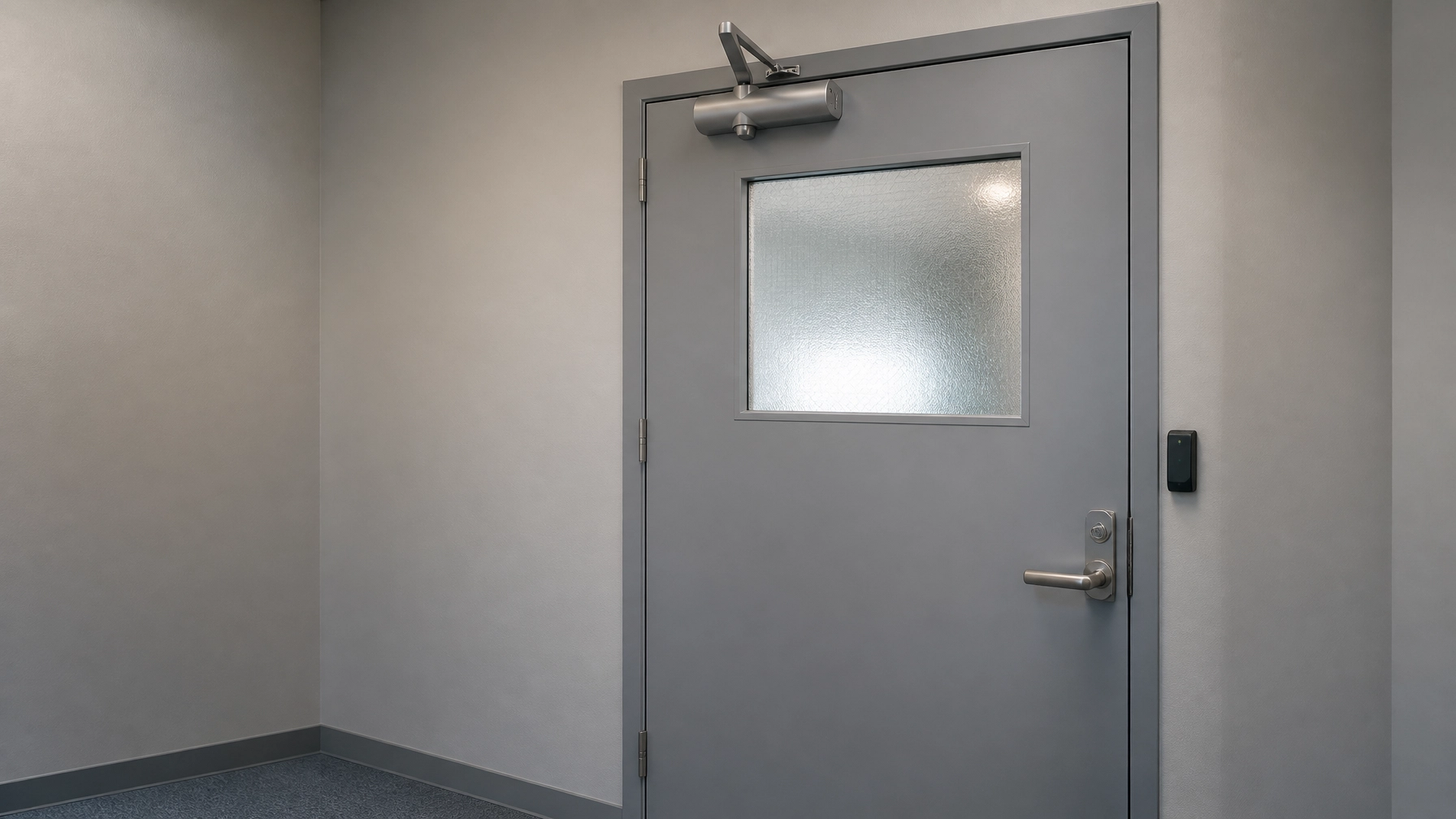
Act Now: Balance Security with Safe Escape
Security systems protect property, residents, guests and staff. Fire-door escape routes protect life in an emergency. These objectives must work together rather than compete.
In houses, flats, HMOs, B&Bs, restaurants, offices and mixed-use premises, changes to locks, handles, access-control systems or doorsets can affect the wider fire strategy. A bolt added for privacy, an electronic lock installed during refurbishment or an obstructed corridor can create a serious compliance issue if the complete arrangement has not been professionally reviewed.
Key Takeaways
- Ensure every escape route remains immediately usable without unnecessary delay.
- Treat locks, access-control systems and fire-door hardware as part of one coordinated arrangement.
- Ask qualified professionals to assess the complete doorset, surrounding walls, escape route and control system.
- Use the Fire Risk Assessment, occupancy, fire strategy and system design to determine the correct solution.
- Arrange a professional Fire Door Survey before altering fire doors or access-control equipment.
- Maintain clear records through proportionate Fire Door Repairs, upgrades or replacement work.
Table of Contents
- Act Now: Balance Security with Safe Escape
- Understand the Legal Stakes of Restricted Egress
- Translate the FRA into a Practical Action Plan
- Choose the Right Solution for the Doorset
- Prepare Different Property Types for Safe Occupation
- Follow a Controlled Professional Process
- Answer Common Questions About Fire-Door Access
- Arrange a Professional Review and Compliance Solution
- Protect Safe Escape Through Ongoing Compliance
Understand the Legal Stakes of Restricted Egress
The responsible person must ensure that emergency routes and exits remain available and usable. The Regulatory Reform (Fire Safety) Order 2005 requires emergency doors to be capable of being opened easily and immediately by people who may need to escape.
Approved Document B also sets expectations for escape doors, fire separation and means of escape. The precise arrangement depends on the building, occupancy and fire strategy, but security should never prevent a person from reaching a place of safety.
Identify Common Access Problems
Property owners and managers should seek professional advice where they find:
- Added bolts, barrel bolts or secondary locking devices.
- Handles that have been changed without confirming compatibility.
- Electronic locks that require a code, fob or specialist knowledge from the escape side.
- Doors that do not release as intended when the alarm operates.
- Routes narrowed or blocked by furniture, storage, deliveries or equipment.
- Access-control systems fitted without considering self-closing and latching.
- Hold-open arrangements that do not coordinate with the fire strategy.
- Doors altered during refurbishment without updated compliance documentation.
These issues do not all have the same solution. A door may need repair, hardware replacement, system redesign or a complete Fire Door Installation. A qualified professional must consider the full arrangement before recommending work.
Translate the FRA into a Practical Action Plan
A Fire Risk Assessment should provide the context for decisions about security and escape. It may identify a failed fire door, an unsuitable locking arrangement, an obstructed route or a weakness in the relationship between the alarm system and access control.
Review the Complete Doorset
A fire door is not simply a door leaf. The assessment should consider the frame, hinges, closer, latch, seals, handles, glazing, locking devices and any electronic equipment attached to or near the doorset.
It should also consider:
- Whether the door protects a protected route or compartment boundary.
- How many people may use the route.
- Whether occupants are familiar with the building.
- Whether the premises uses a stay-put, phased or simultaneous evacuation strategy.
- How the fire alarm and access-control systems interact.
- Whether the door must provide privacy, security or controlled entry without restricting escape.
For flats and HMOs, entrance doors and communal doors require particular care. In B&Bs, restaurants, offices and mixed-use premises, public access and unfamiliar occupants may influence the appropriate escape hardware and operating arrangement.

Convert Findings into Priorities
A professional survey should separate urgent life-safety issues from planned improvement work. It should then identify whether each door requires a proportionate repair, hardware upgrade, access-control adjustment or replacement.
This process provides property owners with a clear route from an FRA finding to a documented physical solution. It also prevents unrelated security work from undermining fire separation.
Choose the Right Solution for the Doorset
A failed fire door does not automatically require complete replacement. Experienced professionals should assess whether the existing doorset can be restored while maintaining its required performance.
Restore Where Appropriate
A suitable Fire Door Repair may address damaged edges, defective hinges, unsuitable handles, worn seals, closing problems or other faults. In some cases, a doorset may be capable of re-lipping or upgrading. In others, the specification, condition or history of the door may mean replacement is the safer route.
The correct decision depends on the door’s construction, rating, condition and intended use. It also depends on whether the proposed hardware is compatible with the doorset and the fire strategy.
Coordinate Security and Fire Performance
Security upgrades should not be considered in isolation. A new access-control system may change the way a door closes, latches or releases. A replacement handle may affect the door’s tested arrangement. Additional wiring or hardware may interfere with seals or reduce the reliability of the doorset.
Qualified installers should coordinate with the responsible person, fire-risk professional, access-control designer and other relevant contractors. This is particularly important where works form part of a wider refurbishment.
Prepare Different Property Types for Safe Occupation
Fire-door access requirements vary according to the building’s use. A single residential house, an HMO and a restaurant do not present the same escape conditions.
Protect Homes, Flats and HMOs
In houses and flats, privacy and security must still allow occupants to escape without unreasonable delay. Flat entrance doors should support the building’s fire strategy, while communal doors must remain suitable for the escape route.
In HMOs, landlords should consider bedroom doors, shared corridors, entrance doors, stairways and final exits as one connected arrangement. An electronic bedroom lock, added bolt or altered handle may affect the operation of the door and should be reviewed by qualified professionals.
Manage Hospitality, Restaurants and Offices
B&Bs and restaurants may contain visitors who are unfamiliar with the layout. This can affect the choice and positioning of escape hardware. Offices may have controlled access between departments, meeting rooms and shared areas, but staff must still have a clear and reliable route out.
Mixed-use premises require additional coordination where commercial areas, residential accommodation, storage rooms and shared escape routes meet. Security arrangements must reflect the whole building rather than a single tenant’s requirements.
Include Refurbishment Changes
Any refurbishment that changes walls, doors, corridors, room layouts or access systems should trigger a review of the fire strategy. Do not assume that an existing door remains compliant after its hardware, frame or surrounding construction has changed.
Flats in buildings under seven storeys and below 18 metres tall may generally be suitable for a specialist, provided they meet the Fire Risk Assessment, specification, insurer and contract requirements. A qualified professional must confirm suitability for the specific property.
Follow a Controlled Professional Process
Elite Fire Door Installations provides a structured route for owners, landlords and property managers across East Sussex and the wider South East.
Step One: Complete a Professional Survey
We begin with a detailed Fire Door Survey for quotations. The review considers the doorset, hardware, access arrangement, escape route and relevant documentation. We work to the requirements of BS 476-22 and BS 8214 where applicable.
Step Two: Provide Clear Quotation Information
Findings are translated into a clear scope of work. This may involve repair, re-lipping, hardware adjustment, access-control coordination or a new Fire Door Installation.
Step Three: Complete Certified Execution
Qualified installers carry out the agreed work using appropriate UK-standard equipment, including Fire Door Gap Gauges, Intumescent Seal Routers, Hinge Jigs, Fire-Rated Packers, Digital Inclinometers, Force Gauges, Laser Levels and certified Intumescent Mastic/Sealant.
No work should be treated as complete until the doorset and its operating arrangement have been considered together.
Step Four: Provide a Signed Compliance File
The handover should record the work completed, relevant doorsets, supporting documentation and any recommendations for ongoing management. This gives owners and managers a practical compliance record for future reviews, refurbishment planning and communication with other professionals.
Answer Common Questions About Fire-Door Access
Can an electronic lock be used on a fire door?
It may be possible, but suitability depends on the doorset, escape strategy, occupancy and system design. The door must remain usable from the escape side without inappropriate reliance on a key, code, fob or specialist knowledge. A qualified professional must assess the complete arrangement before approval.
Are added bolts acceptable on HMO fire doors?
An added bolt may interfere with emergency escape, self-closing or the intended fire strategy. It should not be added or retained without professional assessment. The correct solution may involve a compliant alternative that supports both privacy and safe egress.
What should happen if an access-controlled door does not release?
Treat the issue as a priority for qualified review. Do not attempt DIY wiring, fitting or testing. A professional must determine whether the fault lies with the lock, power supply, alarm interface, release arrangement, door hardware or wider system design.
Can a security upgrade invalidate a fire door arrangement?
Yes. Changing handles, locks, closers, hinges, seals or electronic equipment may affect the doorset’s performance. Professional assessment is essential before and after significant alteration.
Who should assess fire-door access and escape arrangements?
The responsible person should appoint suitably qualified fire safety professionals and certified installers with relevant experience. The assessment should include the complete doorset, escape route and access-control arrangement rather than focusing on one component in isolation.
Arrange a Professional Review and Compliance Solution
If a lock, access-control system or refurbishment change has raised questions about fire-door escape, arrange a professional survey before making further alterations.
Elite Fire Door Installations can help property owners and managers review existing doorsets, identify proportionate remedial work and arrange documented HMO Fire Door Upgrades where required.
For general information about our Fire Door Installations, surveys and compliance services, visit Elite Fire Door Installations.
Protect Safe Escape Through Ongoing Compliance
Effective security and fire safety are compatible when they are designed, installed and managed as one system. The correct arrangement depends on the Fire Risk Assessment, fire strategy, occupancy, doorset specification and access-control design.
By using qualified professionals, proportionate repairs and clear compliance documentation, property owners can protect escape routes without abandoning reasonable security. A professional survey is the appropriate first step where a door, lock or access-control system has been altered or is not operating as intended.
Note: This information is intended as general guidance and does not constitute professional or legal advice. Always consult a qualified fire safety engineer for your specific property.
Email: info@elitefiredoorinstallations.co.uk
Specialist Support: +44 7514 898517
Request a call back: +44 20 4511 9456
Website: https://elitefiredoorinstallations.co.uk
Leave a Reply