

Landlords and property managers across Sussex are currently facing a wave of enforcement. With the introduction of the Fire Safety (England) Regulations 2022, specifically Regulation 10, the pressure to maintain “fit for purpose” fire doors has never been higher. However, many investors are finding themselves staring at vague, three-word failure notices on their Fire Risk Assessments (FRA) that offer no clear path to resolution.
At Elite Fire Door Installations, we specialise in taking those ambiguous reports and turning them into physical, certified safety. Whether you are managing a large block or preparing an HMO conversion, understanding the difference between a “minor adjustment” and a “legal liability” is critical to protecting your investment and your tenants.
Key Takeaways
- Regulation 10 Requirements: Mandatory quarterly checks for communal doors and annual “best endeavour” checks for flat entrance doors in buildings over 11m.
- The Vague Report Trap: Why “non-compliant” is a dangerous term and how to demand specific defect data.
- Repair Over Replace: How physical remediation can save landlords thousands compared to full door set replacements.
- HMO Standards: The heightened scrutiny for shared housing and why initial renovation budgets must include fire door compliance.
- Professional Certification: Why only qualified installers using precision tools can sign off on legal safety documents.
Table of Contents
- The Legal Stakes of Non-Compliance
- Decoding Your Vague FRA Report
- The Elite Solution: Repair vs. Replace
- HMO Investor Preparation
- Our Certification & Precision Process
- Frequently Asked Questions
- Conclusion
The Legal Stakes of Non-Compliance
Under the Fire Safety Act 2021 and the Fire Safety (England) Regulations 2022, the “Responsible Person” (RP) carries a heavy burden of proof. If you own or manage a multi-occupied residential building, Regulation 10 mandates a strict regime of visual checks.
For buildings over 11 metres, this means communal doors must be checked every three months. But even in smaller HMOs and residential blocks, the duty of care remains. Failure to ensure that doors are in “efficient working order and in good repair” isn’t just a maintenance oversight; it is a criminal offence under the Fire Safety Order.
Local authorities and fire services are increasingly active in Sussex, issuing remediation notices that can lead to significant fines or even the closure of a property if life safety is deemed at risk. The financial implications extend beyond fines: non-compliant fire doors can void building insurance, leaving landlords personally liable for millions in damages should a fire occur.
Decoding Your Vague FRA Report
Many landlords receive an FRA report that simply states: “Flat 4 Entrance Door: Non-Compliant” or “Communal Fire Door: Replace.” These vague descriptions are the “Inspector Report Nightmare.” Without technical specifics, you cannot know if the door requires a simple Fire Door Repair or a total Fire Door Installation.

When we provide Fire Door Surveys for Quotations, we decode these vague terms into physical measurements. Common “vague” failures usually boil down to:
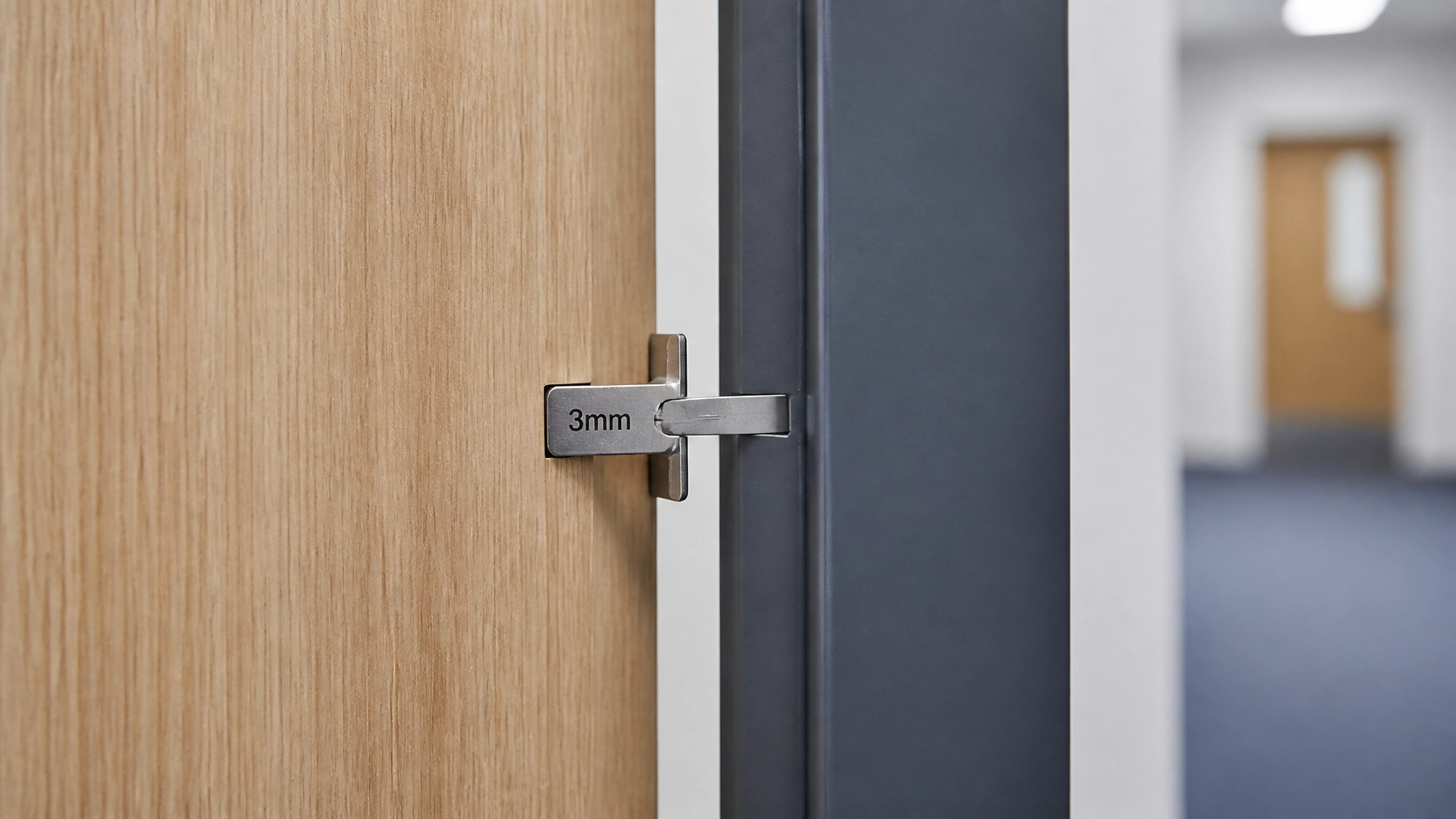
- Excessive Gaps: Often recorded when the gap exceeds the 3mm standard (BS 8214).
- Seal Integrity: Missing or painted-over intumescent strips.
- Self-Closing Failure: The door fails to latch from any angle, often due to poor tension or worn hardware.
- Hardware Compatibility: Non-fire-rated hinges or handles that compromise the door’s integrity.
The Elite Solution: Repair vs. Replace
One of the biggest misconceptions in the industry is that a “failed” door must always be replaced. Full-set replacements are expensive and disruptive. Elite Fire Door Installations takes a different approach. We physically evaluate failing doors to see if they can be salvaged through FRA Remediation.
We specialise in “re-lipping” and upgrading existing timber doors. By using high-performance timber and certified intumescent materials, we can often restore a door’s fire-stopping capabilities to meet BS 476-22 standards. This not only maintains the aesthetic of the building but can save landlords up to 60% compared to the cost of a new door set. However, this is precision work that must be executed by “Certified Installers”: DIY attempts at fire door “fixing” are strictly prohibited and will fail any subsequent legal inspection.
HMO Investor Preparation
For property investors buying houses to convert into HMOs, fire door compliance is often the largest “hidden” cost. A standard domestic door is not a fire door. To pass initial licensing inspections, every bedroom door and kitchen door must typically be an FD30 or FD30S rated set.
Investors must factor Fire Door Installation into their initial renovation budgets. Waiting until the final council walk-through to address fire safety is a recipe for project delays and unexpected capital expenditure. We work with investors during the “strip-out” phase to ensure frames are correctly prepared and that the right hardware: such as BS EN 1154 compliant closers: is selected from day one.
Our Certification & Precision Process
Compliance is a science, not a guess. Our team follows a rigorous, professional process to ensure your property meets all regulatory standards.
- Survey: We conduct detailed Fire Door Surveys for Quotations, using digital tools to map every defect.
- Fixed-Price Quoting: You receive a transparent breakdown of what can be repaired and what must be replaced.
- Certified Execution: Our installers work to FireQual standards, ensuring every component is fitted with expert precision.
- Compliance Documentation: Upon completion, you are handed a full compliance pack, creating a robust “Golden Thread” of safety information for your records.
We utilise a suite of specialised UK-standard compliance tools to ensure accuracy, including:
- Fire Door Gap Gauges: For the critical 2mm-4mm tolerance check.
- Intumescent Seal Routers: To create perfect channels for new strips.
- Digital Inclinometers & Force Gauges: To ensure doors meet BS 8300 opening and closing force requirements.
- Fire-Rated Packers & Mastic: Ensuring the gap between the frame and the wall is fully fire-stopped.

FAQ
Q: Can I just add intumescent tape to my existing doors to make them compliant?
A: No. Fire door compliance requires the entire “assembly” (door, frame, and hardware) to be tested and certified together. Adding seals to a non-fire-rated door does not provide safety or legal compliance. Only a “Certified Installer” can determine if a door is suitable for upgrade.
Q: What is the maximum allowable gap under Regulation 10?
A: While Regulation 10 refers to “good working order,” British Standard BS 8214 specifies that gaps should generally be between 2mm and 4mm. A gap of 3mm is the industry “sweet spot.” Anything wider allows smoke and heat to bypass the door before the intumescent seals can activate.
Q: Does every door in my HMO need a self-closer?
A: Most fire doors in HMOs and communal blocks require a certified self-closing device (complying with BS EN 1154). These must be capable of closing the door fully into the frame and overcoming the latch from any position.
Q: My inspector said my hinges are “non-compliant.” What does that mean?
A: Fire doors must be fitted with at least three hinges that meet BS EN 1935 standards. They must be made of materials with a melting point above 800°C (usually steel) and, in many cases, require intumescent pads behind the hinge blades to prevent heat transfer into the timber.
Q: Can a local handyman install my fire doors?
A: Legally, anyone can “fit” a door, but for fire safety compliance, the work must be certified. If a fire occurs and the door fails, the “Responsible Person” must prove the installation was done correctly. Using non-certified labor is a massive legal risk that most landlords cannot afford.
Conclusion
Regulation 10 has changed the landscape for Sussex property owners. The days of “set and forget” fire doors are over. By moving away from vague, confusing inspector reports and embracing professional, data-driven FRA Remediation, you can ensure your property remains a safe, legal, and profitable investment.
Don’t let a vague report put your business at risk. Elite Fire Door Installations is here to provide the precision and certification you need for total peace of mind.
GET A FREE QUOTE – Secure your property today
For expert advice on fire door compliance or to book a professional survey, visit our website: https://elitefiredoorinstallations.co.uk
Contact Details:
- Email: info@elitefiredoorinstallations.co.uk
- Specialist Support: +44 7514 898517
- Request a call back: +44 20 4511 9456
- Website: https://elitefiredoorinstallations.co.uk
Note: Summarised by artificial intelligence technology. This is not professional or legal advice.
Leave a Reply