

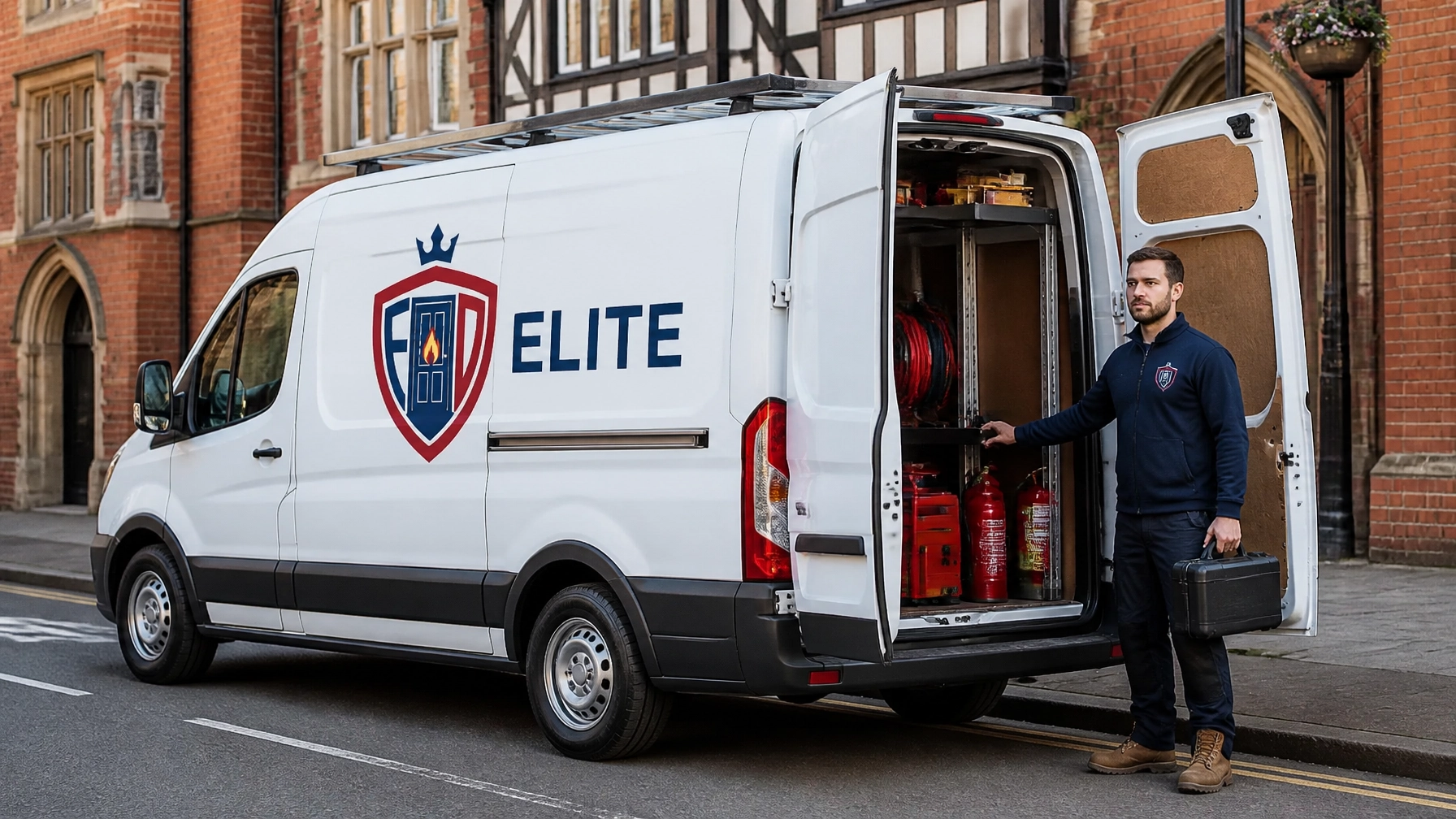
Whether you are a seasoned property investor or a new landlord, the safety of your residents is your highest priority. In Guildford, where the mix of historic architecture and modern student housing creates a unique landscape for fire safety, staying compliant is about more than just a certificate, it is about total peace of mind. If you are preparing for a Fire Door Survey or need a professional Fire Door Installation in Guildford, there are critical factors you must consider to protect your investment and your tenants.
Key Takeaways
- Compliance is Mandatory: Understanding the Fire Safety Act and the Housing Act 2004 is non-negotiable for Guildford landlords.
- Certified Expertise Matters: Only use “Certified Installers” and qualified FRA assessors for your HMO Fire Door Upgrades.
- Repair over Replace: Many failing doors can be restored through professional Fire Door Repair, saving significant costs.
- Precision Tools: Professional compliance requires specialist equipment like gap gauges and force gauges.
- Immediate Action: Failed Fire Risk Assessments (FRAs) require urgent FRA Remediation to avoid heavy fines.
Table of Contents
- The Legal Stakes of Non-Compliance
- Decoding Your FRA Report
- The Elite Solution: Repair vs. Replace
- HMO Investor Preparation in Guildford
- Our Certification & Precision Process
- 10 Things You Should Know Before Your Inspection
- Frequently Asked Questions
- Request a Quote & Schema
- Conclusion
1. The Legal Stakes of Non-Compliance
Operating a rental property or a House in Multiple Occupation (HMO) in Guildford carries significant legal weight. Under the Fire Safety Act and the Regulatory Reform (Fire Safety) Order 2005, the “Responsible Person” is legally obligated to ensure all fire safety measures are adequate and maintained.
Failure to meet these standards is not a minor oversight; it is a criminal offence. Local authorities and fire services in Surrey are increasingly stringent, with the power to issue “Prohibition Notices,” which can shut down your property immediately. Furthermore, non-compliance can lead to unlimited fines and even imprisonment in severe cases. When a door fails to self-close or has gaps exceeding 4mm, it is no longer a fire door, it is a liability. Ensuring a professional Fire Door Installation is the only way to safeguard your legal standing.
2. Decoding Your FRA Report
Receiving a Fire Risk Assessment (FRA) that identifies multiple “fails” on your fire doors can be overwhelming. Many landlords see a list of technical jargon and assume they need to gut the entire building. At Elite Fire Door Installations, we specialise in translating these failed reports into a physical, actionable plan.
We look at the specific remediation requirements listed, whether it’s a failure in the intumescent seals, incorrect hinges, or excessive gaps, and provide a clear roadmap for FRA Remediation. Our goal is to move you from “non-compliant” to “fully certified” with as little disruption as possible.

3. The Elite Solution (Repair vs. Replace)
A common misconception in the industry is that a failing fire door must always be replaced. This is often an unnecessary expense. Our unique approach at Elite Fire Door Installations involves a rigorous evaluation to see if we can physically repair, re-lip, and upgrade your existing doors.
By performing expert Fire Door Repair, we can often bring older doors back to current BS 8214 standards. This includes:
- Re-hinging with BS EN 1935 rated hinges.
- Retrofitting intumescent strips and smoke seals.
- Re-lapping door edges to correct gap issues.
- Adjusting or replacing self-closing devices to ensure the door latches every time.
This sustainable approach saves landlords money while ensuring the safety and integrity of the fire compartment are never compromised.
4. HMO Investor Preparation
If you are an investor buying a property in Guildford to convert into an HMO, fire door compliance should be at the very top of your renovation budget. Guildford Borough Council has specific requirements for “high-risk” rooms, such as kitchens and bedrooms off escape routes, which almost always require FD30s (30-minute fire resistance with smoke seals) doors.
Before you rent out a single room, you must ensure:
- All bedroom doors have thumb-turn locks to allow keyless escape.
- All doors leading to the escape route are fitted with certified self-closers.
- The frames are as fire-rated as the doors themselves.
Factoring in a professional HMO Fire Door Upgrade during the initial renovation phase prevents the costly “double-handling” of work when a council inspector eventually visits.
5. Our Certification & Process
We don’t just “hang doors”; we engineer compliance. Our process is designed to be transparent and bulletproof for your records.
- Survey: A comprehensive Fire Door Survey using digital tools to map every door in your property.
- Fixed-Price Quoting: You receive a detailed breakdown with no hidden costs.
- Certified Execution: Our team of “Certified Installers” carries out the work to FireQual and UK Fire Door Training standards.
- Specialist Tooling: We use Fire Door Gap Gauges for sub-millimetre precision, Hinge Jigs for perfect alignment, Digital Inclinometers to measure closing speeds, and Laser Levels to ensure every frame is perfectly square.
- Handover: You receive full compliance documentation for your FRA and insurance records.

6. 10 Things You Should Know Before Your Inspection
- The 3mm Rule: The gap between the door and the frame should ideally be 3mm (2mm to 4mm is the acceptable range). Anything larger is a fail.
- Smoke Seals are Vital: “FD30” means fire resistance, but “FD30s” means smoke protection. In HMOs, the “s” is almost always mandatory.
- Self-Closers Must Latch: A door that stops an inch short of the frame is not a fire door. It must overcome the latch from any angle.
- No DIY Repairs: Using standard wood filler or non-fire-rated mastic to fix a gap is illegal and dangerous.
- Hinges Matter: You must have at least three BS EN 1935 rated hinges. If they are leaking “black soot” (oil), they are failing.
- Certification Labels: Never paint over the fire rating labels (plugs) on the top or side of the door.
- Signage: Common area doors must have “Fire Door Keep Shut” signs visible at eye level.
- Glass Integrity: If your fire door has glass, it must be fire-rated (e.g., wired or specialist clear glass) with intact intumescent glazing beads.
- Threshold Gaps: The gap at the bottom of the door should usually be no more than 8mm (or 3mm if smoke protection is required at the threshold).
- The Paper Trail: An inspector will ask for your maintenance logs. If you don’t have a record of your Fire Door Surveys, you are at risk.

7. FAQ Section
Q: Can I install my own fire doors to save money?
A: Legally, fire doors must be installed by a “competent person.” In a commercial or HMO setting, “competence” is usually demonstrated through third-party certification. If a fire occurs and the door was DIY-installed, your insurance will likely be void, and you could face personal prosecution.
Q: How often do I need a Fire Door Survey in Guildford?
A: For most HMOs and residential blocks, a professional survey is recommended every 6 to 12 months, depending on the usage and risk level identified in your FRA. High-traffic doors should be checked more frequently.
Q: What is the difference between FD30 and FD60?
A: FD30 provides 30 minutes of fire resistance, whereas FD60 provides 60 minutes. Most domestic HMOs require FD30s, but certain commercial buildings or larger residential blocks in Guildford may require FD60 for specific compartmentation.
Q: Does my Fire Door Repair come with a certificate?
A: Yes. When Elite Fire Door Installations performs a repair or upgrade, we provide documentation that confirms the door has been brought up to the required safety standards, which you can provide to your Fire Risk Assessor.
Q: Why is my self-closer slamming or not closing?
A: This usually indicates a failure in the hydraulic unit or poor initial installation. Our technicians use digital force gauges to ensure your closer meets the closing force requirements of BS 8300 while still being easy for residents to open.
8. Final Call to Action
Don’t wait for a failed inspection to take action. Protecting your property and your tenants starts with a single, professional step. Ensure your Guildford property is safe, compliant, and beautifully finished with the experts.
Request Your Free, No-Obligation Quote Today
9. Conclusion
Fire safety doesn’t have to be a source of stress. By choosing Elite Fire Door Installations, you are choosing a partner that understands the intricate balance between aesthetic design and rigorous safety compliance. Whether you need a full suite of Fire Door Installations for a new HMO conversion or urgent Fire Door Repair to pass your next survey, we bring precision, certification, and peace of mind to every project in Guildford.
Contact Elite Fire Door Installations
Email: info@elitefiredoorinstallations.co.uk
Specialist Support: +44 7514 898517
Request a call back: +44 20 4511 9456
Website: https://elitefiredoorinstallations.co.uk
Leave a Reply