

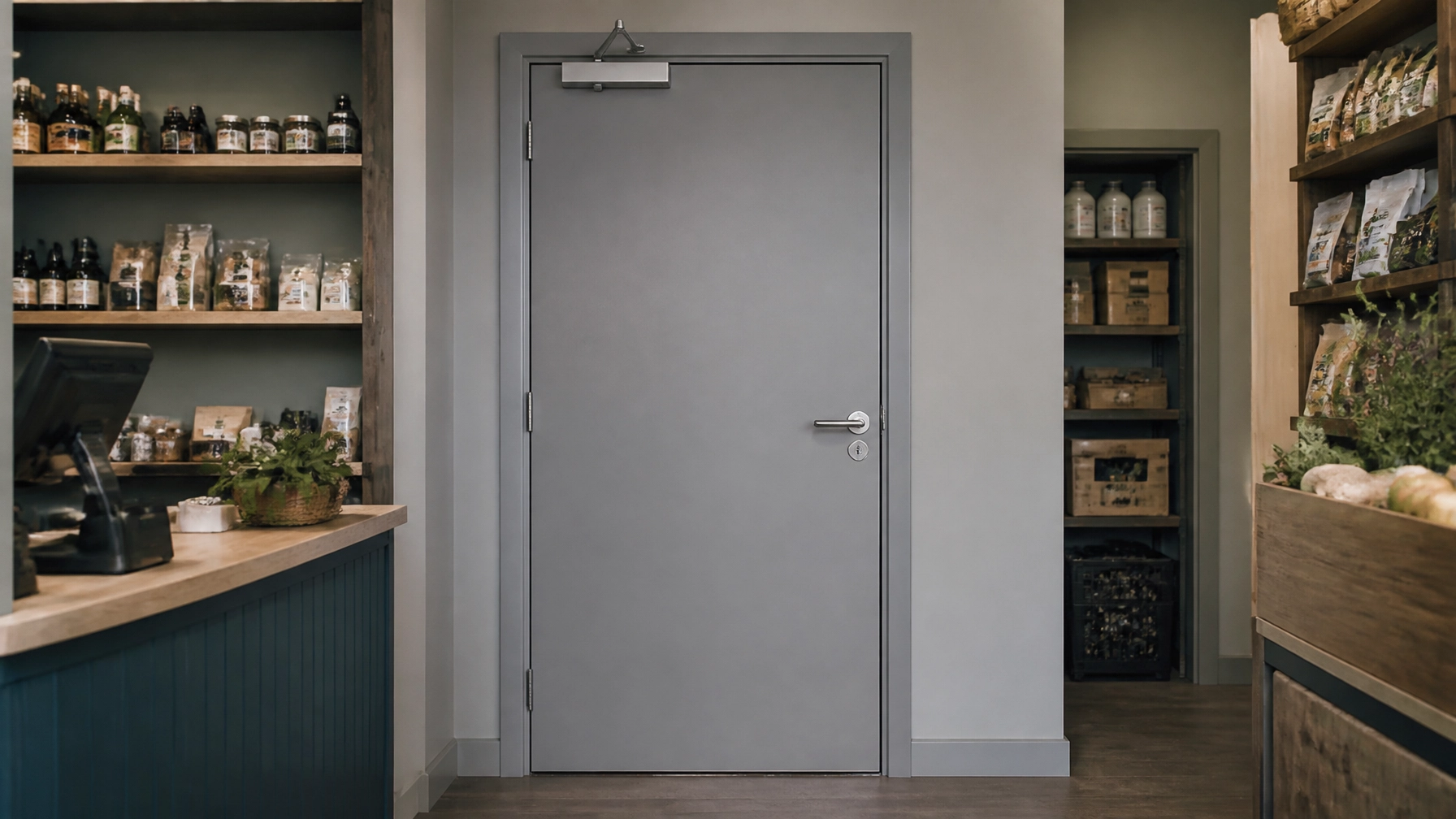
A fire door is an important part of your premises’ escape strategy and fire compartmentation. In a small office, shop or independent business, refurbishment work and everyday changes can affect how a door performs. A professional review helps you identify what needs attention, obtain a clear quotation and complete proportionate work with minimal disruption.
Table of Contents
- Protect Your Premises from Avoidable Fire Door Problems
- Understand the Legal Responsibilities
- Translate Your Fire Risk Assessment into Action
- Choose Repair, Upgrade or Replacement Proportionately
- Prepare Premises and Property Investments Carefully
- Follow a Clear Professional Process
- Resolve Common Fire Door Questions
- Book a Professional Review and Quote
- Conclude with a Practical Compliance Plan
Protect Your Premises from Avoidable Fire Door Problems
Fire doors help limit the movement of fire and smoke between parts of a building. This gives occupants more time to leave and helps protect escape routes while emergency arrangements take effect.
In small commercial premises, fire doors are often located in places that are easy to overlook. Their importance is not limited to a main entrance or staircase.
Understand Where Fire Doors Matter Most
A professional fire door survey may identify doors serving:
- Protected corridors and escape routes
- Stairways and circulation areas
- Stockrooms and storage areas
- Kitchens and staff rooms
- Electrical, plant and service rooms
- Internal divisions between different parts of the premises
- Doors separating customer areas from back-of-house spaces
- Shared entrances or areas serving more than one business
The required performance depends on the building layout, occupancy, fire risk assessment and construction. A small shop may have different requirements from a two-storey office, even where the premises appear similar.
Elite Fire Door Installations provides professional Fire Door Surveys for Quotations to help business owners understand which doors require attention before committing to wider work.
Recognise the Effect of Commercial Changes
A door may have worked correctly when first installed but be affected by later changes. Business owners should arrange a professional review after:
- New flooring, carpets, thresholds or raised floor finishes
- Decorating or wall alterations around the frame
- Replacement handles, locks, hinges or closers
- Installation of keypads, card readers or other access-control equipment
- Changes to room use, storage arrangements or internal layouts
- Building refurbishment or the creation of new partitions
- Damage caused by deliveries, moving equipment or frequent use
These changes can affect closing performance, clearances, hardware compatibility, seals or the relationship between the door and its frame. A professional assessment identifies the issue without requiring unnecessary replacement or disruption.
Understand the Legal Responsibilities
The responsible person for a workplace must take reasonable steps to protect employees, visitors and other relevant occupants from fire. The Regulatory Reform (Fire Safety) Order 2005 places duties on those responsible for non-domestic premises, while the Fire Safety Act 2021 reinforces the importance of fire safety management in relevant buildings.
For small businesses, responsibility may rest with the owner, employer, leaseholder, managing agent or another person with control over the premises. The exact arrangement depends on the lease, building structure and management responsibilities.
Maintain Safe Escape Routes
Fire doors should support the findings of the fire risk assessment. Where a door protects an escape route, stairway or higher-risk room, it must remain suitable for that purpose throughout the building’s use.
Access-control changes require particular care. A new lock or electronic device must not create an additional barrier to escape, prevent the door from closing correctly or compromise the door assembly. Any changes should be reviewed by a suitable professional before installation.
Enforcement action can include formal notices, prosecution, fines and restrictions on the use of premises. The consequences may also include business interruption, insurance complications, reputational damage and increased liability following an incident.
The objective is not to create concern. It is to ensure that small business owners address fire door issues early, when a proportionate solution is usually easier to arrange.
Keep Suitable Records
A clear compliance file should demonstrate what was reviewed, which work was recommended and what was completed. Depending on the premises, useful records may include:
- The relevant fire risk assessment
- Survey findings and photographs
- Quotation and agreed scope of work
- Product and hardware information
- Installation or repair records
- Completion notes and future maintenance recommendations
Official guidance for offices and shops is available through the GOV.UK fire safety risk assessment guide.
Translate Your Fire Risk Assessment into Action
A fire risk assessment may identify a door as damaged, unsuitable, poorly maintained or in need of further assessment. It does not always provide the detailed physical solution required to restore the door.
Prioritise the Doors That Affect Safety
A professional fire door survey translates the report into a practical action plan. It considers:
- The door’s position within the escape and compartmentation strategy
- The condition of the leaf, frame, seals and hardware
- Whether later alterations have affected performance
- The required level of fire resistance
- Whether repair, upgrading or replacement is proportionate
- The effect of proposed work on business operations
This approach prevents business owners from treating every door identically. Some doors may require urgent remedial work, while others may only need documented monitoring or planned maintenance.
Plan Work Around Your Business
Small offices and shops cannot always close for several days. A clear quotation should explain the scope, sequence and expected disruption before work begins.
Elite Fire Door Installations can coordinate Fire Door Repairs, upgrades and Fire Door Installations around opening hours where practical. The aim is to restore safety and functionality without extending the project unnecessarily.

Choose Repair, Upgrade or Replacement Proportionately
A failed or damaged fire door is not automatically beyond repair. The appropriate solution depends on the door assembly, the nature of the fault, the available evidence and the requirements of the fire risk assessment.
A professional assessment may recommend:
- Repairing damage where the door remains suitable
- Re-lipping or upgrading a door where appropriate
- Replacing unsuitable or incompatible hardware
- Restoring seals, closers or hinges with suitable components
- Replacing the complete doorset where repair cannot provide a dependable outcome
This assessment-led approach can save money compared with replacing every door. It also helps avoid a common problem: installing a new door leaf into an unsuitable frame or pairing a fire door with hardware that does not support its intended performance.
Work should follow the relevant specification and be completed with precision. Elite Fire Door Installations works to BS 476-22 and BS 8214 principles when delivering commercial fire door solutions.
Prepare Premises and Property Investments Carefully
Business owners planning a refurbishment should include fire doors in the project brief from the beginning. This is particularly important for property investors purchasing buildings for conversion, letting or mixed commercial use.
Before committing to a renovation budget, allow for:
- A professional survey of existing fire doors and frames
- Fire risk assessment recommendations
- Remedial work to escape-route and service-room doors
- Compatible hinges, latches, closers and access-control arrangements
- Flooring and threshold changes around door openings
- Decoration that does not interfere with seals or hardware
- Replacement doorsets where existing assemblies are unsuitable
- A signed compliance file for future management and tenancy records
Investors who also operate HMOs should arrange a separate review of the residential fire strategy and consider HMO Fire Door Upgrades as part of the conversion budget. Resolving fire door requirements before occupation is more efficient than discovering problems after licensing discussions or tenant move-in.
Follow a Clear Professional Process
A straightforward process gives business owners confidence that recommendations are proportionate and properly documented.
Step One: Arrange a Survey
We begin with a structured survey of the relevant doors, frames, hardware and surrounding building conditions. The survey considers the fire risk assessment, escape routes, room use and any recent refurbishment.
Specialist equipment may include Fire Door Gap Gauges, Intumescent Seal Routers, Hinge Jigs, Fire-Rated Packers, Digital Inclinometers, Force Gauges and Laser Levels. Certified Intumescent Mastic/Sealant and suitable UK-standard hardware may be specified where required.
Step Two: Receive a Fixed-Price Quotation
The findings are converted into a clear quotation. It separates repair, upgrade and replacement recommendations so you can make an informed commercial decision.
The quotation should explain what work is necessary, what is optional, what products are proposed and how the work can be scheduled.
Step Three: Complete the Required Work
Our installation and remedial work focuses on precision, compatibility and reliable operation. We take account of the existing frame, floor finish, access-control arrangements and surrounding decoration.
The work is planned to reduce avoidable disruption to staff, customers, tenants and daily trading.
Step Four: Receive Your Compliance File
At handover, you receive documentation recording the agreed works and relevant completion information. This provides a useful reference for future fire risk assessments, property management and maintenance planning.

Resolve Common Fire Door Questions
1. Do small shops always need fire doors?
Not every internal door has the same requirement. The need for fire resistance depends on the building layout, escape strategy, room use, construction and fire risk assessment. A professional survey can identify which doors are safety-critical.
2. Can a new access-control system affect a fire door?
Yes. Keypads, card readers, electromagnetic devices and replacement locks can affect escape, closing action and compatibility with the doorset. Any access-control change should be reviewed by a competent fire door professional before work proceeds.
3. Can new flooring cause a fire door problem?
Yes. Changes in floor level or surface thickness can affect the way a door moves, closes and interfaces with its frame. Arrange a professional review as part of the flooring project rather than waiting for a problem to develop.
4. Does a damaged fire door always need replacing?
No. Some doors may be suitable for proportionate repair, re-lipping or upgrading. Others may require complete replacement. The decision should be based on a professional assessment of the entire doorset and the requirements of the fire risk assessment.
5. Who should carry out fire door repairs and installations?
Fire door work should be completed by suitably qualified and experienced professionals who understand doorsets, fire-resisting construction, hardware compatibility and relevant British Standards. Unplanned alterations can create further compliance problems.
Book a Professional Review and Quote
If your office, shop or independent business has undergone refurbishment, changed its access-control arrangements or experienced problems with fire doors, arrange a professional survey before commissioning further work.
Elite Fire Door Installations provides practical support for property owners and businesses across East Sussex and the wider South East. We can review your requirements, explain the available options and provide a clear quotation for proportionate repairs, upgrades or new installation.
You can also visit Elite Fire Door Installations to learn more about our fire door services and request a professional survey.
Conclude with a Practical Compliance Plan
Fire doors in small offices and shops form part of a wider fire safety strategy. Escape routes, storage areas, service rooms and internal divisions all require appropriate consideration, particularly after refurbishment or changes to hardware, flooring and access control.
The most effective approach is calm and structured: review the premises, obtain a professional survey, receive a clear quotation, complete proportionate work and retain a signed compliance file. This helps protect occupants, support legal adherence and reduce unnecessary disruption to your business.
Note: This information is intended as general guidance and does not constitute professional or legal advice. Always consult a qualified fire safety engineer for your specific property.
Contact Elite Fire Door Installations
- Email: info@elitefiredoorinstallations.co.uk
- Specialist Support: +44 7514 898517
- Request a call back: +44 20 4511 9456
- Website: https://elitefiredoorinstallations.co.uk
Leave a Reply