

Key Takeaways
- Keep one clear, current fire-door compliance file for each property or building.
- Include the client-provided Fire Risk Assessment information, professional survey findings, door schedules and relevant product details.
- Record all authorised repairs, upgrades, installations, photographs and handover documents.
- Maintain evidence of ongoing checks, resident communications and follow-up actions.
- Use qualified FRA assessors and Certified Installers for professional fire-door work.
- A well-organised file can support property sales, HMO licensing discussions, insurance questions and future management handovers without guaranteeing a particular outcome.
Table of Contents
- Secure a Clear Fire-Door Compliance File
- Understand the Legal Importance of Fire-Door Records
- Translate Survey Findings into Action
- Choose Proportionate Repair or Replacement
- Prepare Your File for Different Property Uses
- Follow a Professional Compliance Process
- Answer Common Questions About Compliance Files
- Request Professional Support and Documentation
- Conclude with a Clear Compliance Record
1. Secure a Clear Fire-Door Compliance File
A fire-door compliance file provides a structured record of what was known, what was recommended, what work was completed and what information should be retained for future management.
This is relevant to property owners, landlords, HMO managers, flat managers, B&B operators and restaurant owners. Fire doors may form part of escape routes, protected corridors, stairways, bedrooms, kitchens, service areas or flat entrances. Each property has different risks and responsibilities, so documentation should reflect the specific building.
A useful file should be easy for an owner, managing agent, buyer, insurer, licensing officer or future contractor to understand. It should not simply contain isolated photographs or old invoices. It should connect the Fire Risk Assessment, professional survey findings, works completed and ongoing maintenance arrangements.
2. Understand the Legal Importance of Fire-Door Records
The responsible person must take reasonable steps to manage fire safety and keep relevant fire precautions maintained. Fire doors form part of the building’s means of protection and should be managed through a suitable, documented system.
The official government guidance on the Fire Safety (England) Regulations 2022 explains specific duties relating to fire doors in relevant multi-occupied residential buildings. These include recorded checks for communal fire doors and best endeavours to check flat entrance doors where the regulations apply.
A compliance file helps demonstrate that the property owner has taken an organised approach. It can show:
- What fire safety information was available at the time.
- Which doors were covered by the professional survey.
- What defects or uncertainties were identified.
- Which remedial actions were recommended.
- What work was authorised and completed.
- What maintenance or follow-up is still required.
Records do not automatically prove that every door is compliant. They should support a current Fire Risk Assessment and professional advice. However, missing or fragmented information can make it much harder to explain the property’s fire-door arrangements.
Maintain Records for the Property’s Full Lifecycle
Keep the file current when the property is refurbished, sold, converted, reconfigured or transferred to a new managing agent. Fire doors can be affected by changes to layouts, escape routes, occupancy, hardware and building use.
For example, a house converted into an HMO may require a different fire-door arrangement from its previous use. A restaurant may have fire doors protecting kitchens, storage areas and escape routes. A B&B may need clear records for guest bedrooms and shared circulation spaces.
3. Translate Survey Findings into Action
A client-provided Fire Risk Assessment should be included at the beginning of the file. It gives the professional team important context about the property, occupancy, escape strategy and identified fire safety measures.
The next step is a professional Fire Door Survey for Quotations. This should be completed by suitably qualified professionals who understand the relevant requirements and the intended use of each door.
The survey record should identify, where applicable:
- The door’s location and unique reference.
- Whether it serves a flat, bedroom, communal corridor, stairway or service area.
- The expected fire-resistance requirement.
- The condition of the door leaf, frame, seals and hardware.
- Any information that remains unavailable or requires confirmation.
- Recommended repair, upgrade or replacement actions.
- Any matters requiring input from a qualified FRA assessor or other specialist.
A door schedule then brings the information together. Each door can be tracked from the original survey through to completed works and future maintenance. This is particularly useful in HMOs, blocks of flats and buildings with several different door types.

4. Choose Proportionate Repair or Replacement
A failed or uncertain fire door does not always require immediate wholesale replacement. A qualified professional should assess whether the door can be appropriately repaired, re-lipped, upgraded or otherwise brought back into an acceptable specification.
Where appropriate, Fire Door Repairs may address issues such as damaged components, unsuitable hardware, defective seals or problems with the closing arrangement. In other cases, a complete Fire Door Installation may be the more suitable route.
This decision must be made by qualified professionals. Property owners should not attempt to alter fire doors, replace hardware or apply materials without confirmation that the proposed work is suitable for the complete door assembly.
The file should explain the decision made and retain:
- The original survey findings.
- The quotation or written scope of work.
- Product information for doors, seals, hinges, closers and other components.
- Records of the completed repair or installation.
- Photographs where appropriate.
- Any relevant limitations, outstanding actions or maintenance requirements.
Work should be undertaken with appropriate reference to BS 476-22 and BS 8214, alongside the specific door specification and the requirements of the building.
5. Prepare Your File for Different Property Uses
A clear file supports different property decisions without guaranteeing a particular result.
Support Property Sales and Management Handovers
When selling a house, flat, HMO or commercial property, a complete fire-door file can help answer reasonable questions about the building’s documented fire safety arrangements. It also gives a new owner or managing agent a clearer starting point for future maintenance.
Support HMO Licensing Discussions
For HMO owners, the file can bring together the Fire Risk Assessment, door schedule, professional survey, completed works and resident communications. This may assist discussions with relevant parties, although licensing decisions remain dependent on the property, authority requirements and wider evidence.
Support Insurance Questions
Insurers may request information about fire safety management, maintenance or remedial works. A structured file allows the owner to provide relevant records for consideration. Always follow the requirements of the individual insurance policy and insurer.
Use the Quick Compliance Cheat Sheet Carefully
Flats in buildings under seven storeys and below 18 metres tall may generally be suitable for a specialist review, provided the Fire Risk Assessment, specification, insurer and contract requirements all support that approach.
This is only a starting point. Building height, layout, occupancy, construction, escape arrangements and fire strategy must be considered by qualified professionals.
6. Follow a Professional Compliance Process
Elite Fire Door Installations uses a clear process designed to make documentation practical and understandable.
Step One: Review the Available Information
Provide the current Fire Risk Assessment, drawings or door information where available, previous records and details of any known concerns.
Step Two: Complete the Professional Survey
A qualified team completes the Fire Door Survey for Quotations and prepares a door schedule with appropriate recommendations.
Step Three: Issue a Clear Written Scope
The quotation should distinguish between repair, upgrade and replacement requirements. It should identify the work proposed for each door and any information that remains subject to further professional confirmation.
Step Four: Complete Certified Work
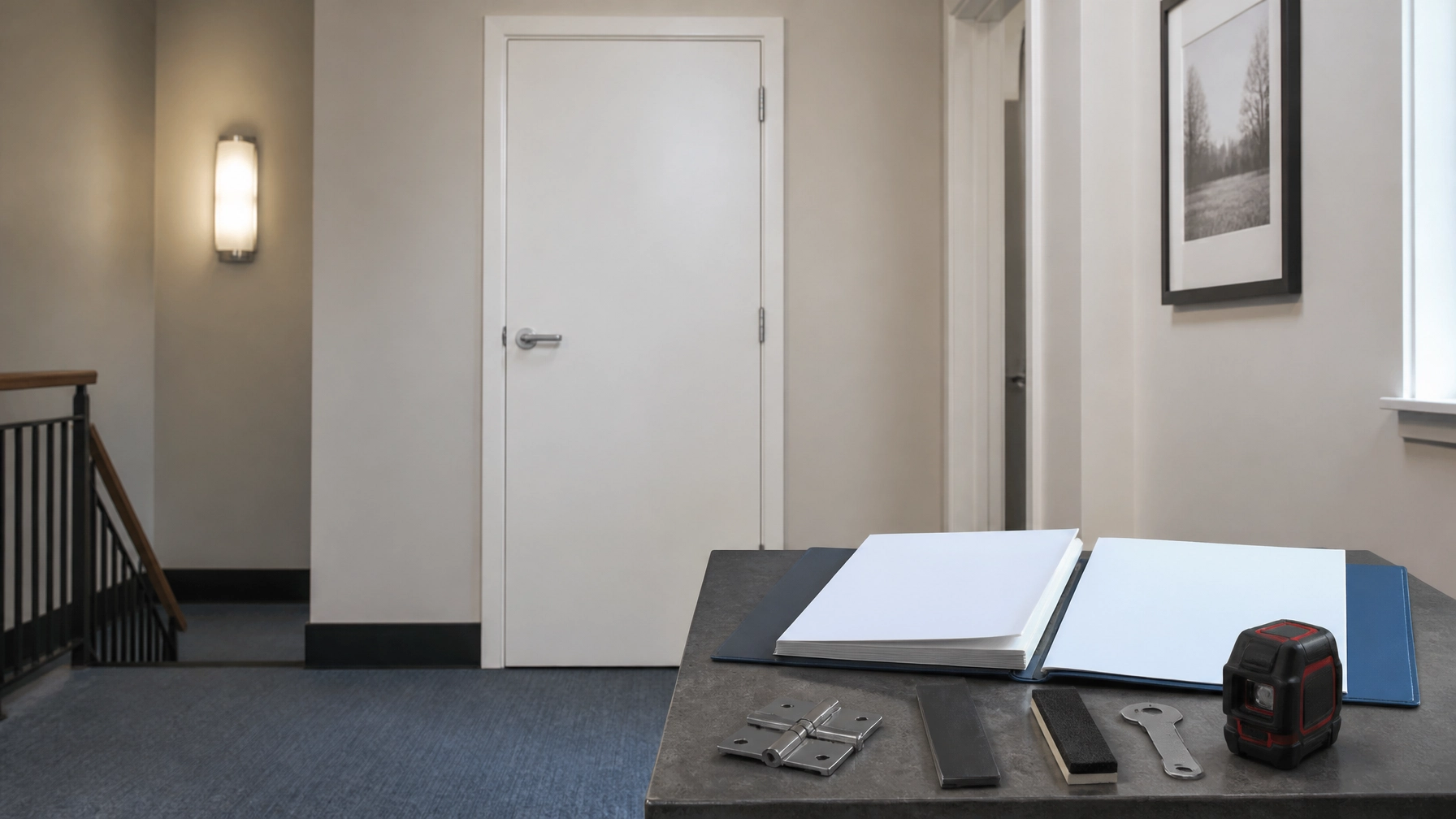
Qualified Certified Installers carry out the agreed Fire Door Installations, Fire Door Repairs or HMO upgrades. Professional UK-standard tools may include Fire Door Gap Gauges, Intumescent Seal Routers, Hinge Jigs, Fire-Rated Packers, Digital Inclinometers, Force Gauges, Laser Levels and certified Intumescent Mastic or Sealant.
These tools should be used by trained professionals as part of a controlled process. They are not a substitute for competence, correct product information or an appropriate fire strategy.
Step Five: Complete the Handover File
The final file should contain the completed door schedule, product details, work records, photographs where appropriate, maintenance guidance and any relevant handover documents.
7. Answer Common Questions About Compliance Files
What should a basic fire-door compliance file contain?
It should include the client-provided Fire Risk Assessment information, professional survey findings, a door schedule, written quotation, product details, repair or installation records, photographs where appropriate, handover documents and future maintenance records.
Do all fire doors need the same records?
No. Records should reflect the door’s location, use, specification and role within the building. A flat entrance door, HMO bedroom door, communal stairway door and restaurant kitchen door may have different requirements.
Can a landlord create the technical records without a professional?
A landlord can retain documents and manage communications, but technical assessment and fire-door work should be completed by qualified FRA assessors and Certified Installers. No DIY alterations should be made to a fire door.
How long should records be retained?
Retain records for as long as they remain relevant to the property’s fire safety management. Keep them updated when doors are repaired, replaced, affected by building work or transferred to a new owner or manager.
Can a compliance file guarantee an HMO licence or property sale?
No. A file supports transparency and ongoing management, but licensing, insurance, sale and regulatory decisions depend on the full circumstances and the requirements of the relevant professional or authority.
8. Request Professional Support and Documentation
A clear compliance file gives property owners a calmer, more organised way to manage fire-door responsibilities. It can help identify missing information, record proportionate remedial work and support future conversations with buyers, managers, insurers and licensing stakeholders.
If your records are incomplete, begin with a professional Fire Door Survey for Quotations. Elite Fire Door Installations can then help establish a clear route through review, written scope, qualified work and documented handover.
For further information about our professional fire-door services, visit the Elite Fire Door Installations website.
9. Conclude with a Clear Compliance Record
Fire-door compliance is easier to manage when the information is complete, current and connected. A well-prepared file should explain the property’s fire-door arrangements, record professional recommendations, document completed works and identify future maintenance responsibilities.
Whether you are selling a property, managing an HMO, operating a B&B or restaurant, or overseeing flats, qualified professional support remains essential. A review, clear quotation, proportionate repair or upgrade and signed compliance file can provide a practical foundation for continued fire safety management.
Contact Elite Fire Door Installations
- Email: info@elitefiredoorinstallations.co.uk
- Specialist Support: +44 7514 898517
- Request a call back: +44 20 4511 9456
- Website: https://elitefiredoorinstallations.co.uk
Note: This information is intended as general guidance and does not constitute professional or legal advice. Always consult a qualified fire safety engineer for your specific property.
Leave a Reply