

GET A FREE QUOTE: Looking to secure your rental properties with fully accredited fire safety measures? Ensure complete regulatory adherence by visiting GET A FREE QUOTE today.
Key Takeaways
- Insurance Vulnerability: Under the Insurance Act 2015, using unaccredited handymen for fire door repairs or adjustments can invalidate your commercial and property insurance policies following an incident.
- Precision Matters: Fire safety compliance is not a DIY or general maintenance task. It requires strict adherence to BS 476-22 and BS 8214 standards using calibrated UK-standard tools.
- Financial Protection: Certified fire door repairs and upgrades by qualified specialists save landlords thousands of pounds in potential fines, enforcement notices, and costly full replacements.
- HMO Investor Readiness: Investors converting residential properties into Houses in Multiple Occupation (HMO) must prioritize certified fire door installations before tenant occupancy to pass local authority licensing audits.
Table of Contents
- Introduction: The Hidden Liability in Your HMO
- The Legal and Insurance Stakes of Non-Compliance
- Decoding Your Fire Risk Assessment Report
- The Elite Solution: Repair vs. Replace for Maximum ROI
- HMO Investor Preparation: What Councils Check First
- Our Certified Process: Precision Engineering Meets Compliance
- Frequently Asked Questions
- Conclusion
1. Introduction: The Hidden Liability in Your HMO
Operating a House in Multiple Occupation (HMO) comes with a mountain of regulatory obligations, yet few components of property management carry as much life-safety weight as fire doors. When a Fire Risk Assessment (FRA) flags a binding door, a failing intumescent seal, or an excessive gap, property managers face an immediate fork in the road: hire a general handyman for a quick, cheap fix, or commission accredited specialists.
Choosing a handyman to shave down a swollen door or slap on generic hinges might seem like a clever way to save money on maintenance overheads. In reality, it represents a catastrophic gamble with your property insurance, your licensing status, and your tenants’ lives. At Elite Fire Door Installations, we frequently encounter poorly executed handyman ‘fixes’ that actually breach building regulations, leaving landlords entirely exposed.
2. The Legal and Insurance Stakes of Non-Compliance
Under the Regulatory Reform (Fire Safety) Order 2005 and the Fire Safety Act, the ‘Responsible Person’: typically the landlord, property owner, or managing agent: bears absolute legal accountability for the fire safety performance of every door assembly in the building.
Furthermore, under the Insurance Act 2015, policyholders have a legal duty of ‘fair presentation of risk’. If a fire occurs and investigators discover that fire doors were maintained, adjusted, or installed by unaccredited tradespeople lacking formal qualifications or third-party certification (such as FireQual), insurers routinely void policies on the grounds of gross negligence or unworkable workmanship.
“Handymen operate outside the stringent traceability and technical standards required for passive fire protection. When insurance underwriters investigate a claim, uncertified alterations are treated as a direct breach of policy terms.”
3. Decoding Your Fire Risk Assessment Report
A Fire Risk Assessment is rarely a simple checklist; it is a complex legal document outlining vulnerabilities in your building’s compartmentation. When an assessor notes that a fire door fails to close properly or lacks the necessary smoke seals, property owners cannot simply hand that bullet point to a general contractor.
We translate complex technical audit notes into actionable compliance pathways through our comprehensive Fire Door Surveys. Our certified assessors examine the entire assembly: from leaf composition and lipping to frame integrity and ironmongery: ensuring that every recommended remedy aligns perfectly with British Standards BS 476-22 and BS 8214.

4. The Elite Solution: Repair vs. Replace for Maximum ROI
One of the greatest misconceptions in property management is that a failing fire door must always be ripped out and replaced at great expense. General handymen often push for full replacements because they lack the technical capability to restore fire performance to damaged assemblies.
At Elite Fire Door Installations, our unique selling point is our ability to evaluate failing doors to physically repair, re-lip, and upgrade them. Utilising professional techniques and certified components, our experts restore structural integrity and regulatory compliance at a fraction of the cost of full replacements. Whether it involves routing out channels for new intumescent strips or re-hanging doors with heavy-duty fire-rated hinges, our Fire Door Repairs deliver maximum durability and verified safety.
5. HMO Investor Preparation: What Councils Check First
For property investors purchasing older buildings or single-family homes to convert into high-yield HMOs, fire door compliance is the number one hurdle during local authority licensing inspections. Environmental health and fire officers do not compromise on compartmentation.
Before welcoming your first tenants, your property must feature certified FD30 or FD60 fire doors equipped with self-closers, cold smoke seals, and intumescent strips. Factor these requirements directly into your acquisition and renovation budgets. Partnering with specialists early in your refurbishment schedule ensures that your HMO Upgrades pass council audits on the very first inspection, preventing costly void periods and delayed licensing.

6. Our Certified Process: Precision Engineering Meets Compliance
Achieving true fire door compliance demands specialised technical instruments and unwavering attention to detail. Our structured, professional four-step process guarantees absolute peace of mind:
- Step One: Comprehensive Survey : We inspect every aperture using calibrated gauges to record exact dimensions, hardware ratings, and compliance gaps.
- Step Two: Fixed-Price Quoting : Transparent, detailed proposals outlining necessary repairs, upgrades, or new Fire Door Installations.
- Step Three: Certified Execution : Our technicians execute work using specialised UK-standard equipment, including:
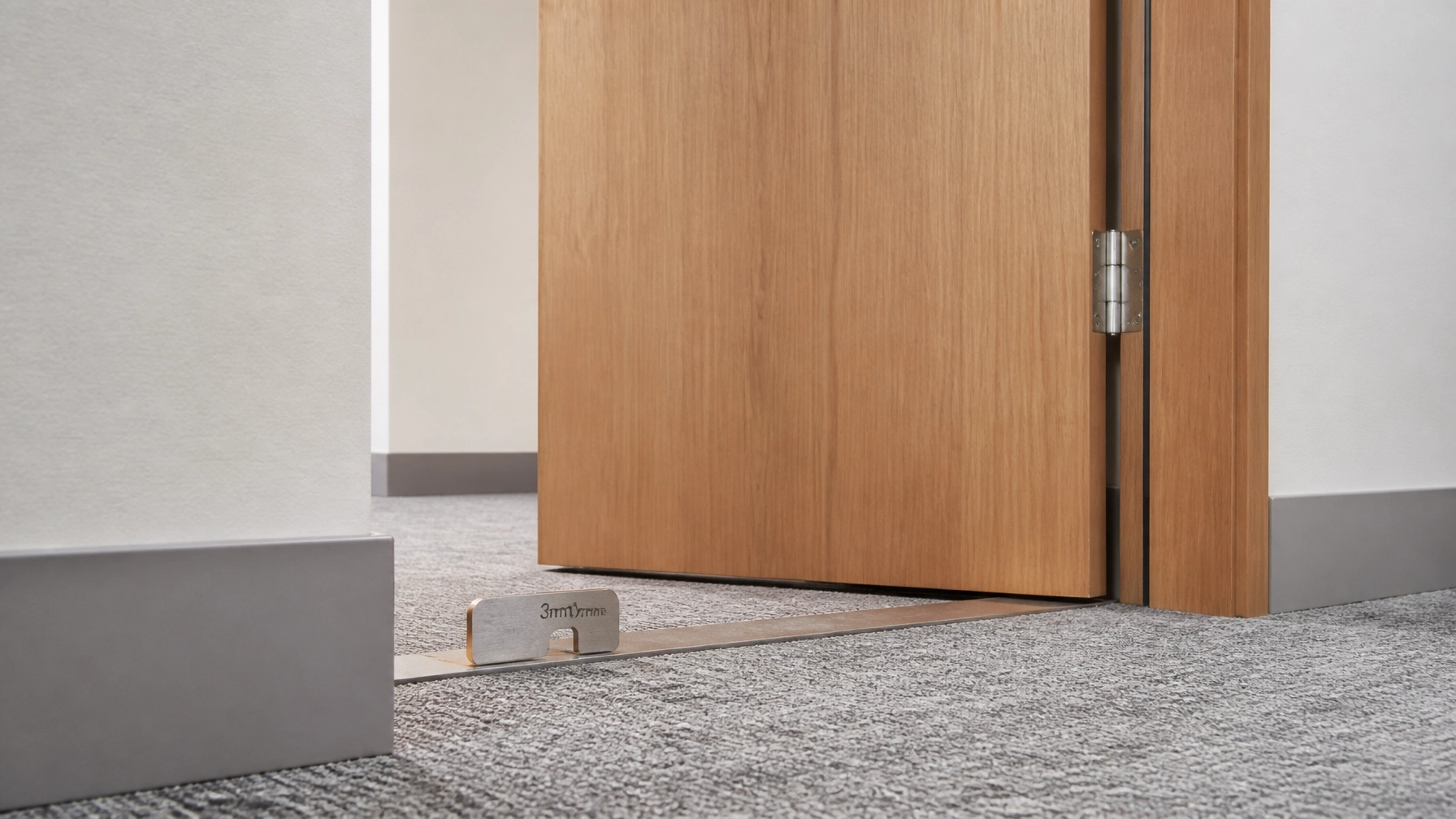
- Fire Door Gap Gauges to verify the critical 2mm–4mm operational tolerances.
- Intumescent Seal Routers for flawless channel cutting.
- Hinge Jigs to ensure mortising precision for BS EN 1935 hardware.
- Fire-Rated Packers/Shims for secure, plumb frame fitting.
- Digital Inclinometers & Force Gauges to verify BS 8300 opening and closing forces.
- Laser Levels for absolute horizontal and vertical alignment.
- Certified Intumescent Mastic and Sealant to seal perimeter gaps.
- Step Four: Handover Documentation : Issuance of complete certification, compliance logs, and photographic evidence for your property records and insurance underwriters.
7. Frequently Asked Questions
Can a general handyman legally install or repair a fire door in an HMO?
While legally a property owner can technically attempt any physical work, doing so on a fire door is a severe regulatory risk. Handymen lack third-party accreditation and formal fire safety training. If a fire occurs, uncertified installation invalidates insurance and violates the Regulatory Reform (Fire Safety) Order 2005.
What is the acceptable gap tolerance around a fire door?
According to British Standards, gaps between the door leaf and the frame (and between meeting stiles on double doors) must be consistently maintained between 2mm and 3mm. Achieving this requires precision measurement using calibrated Fire Door Gap Gauges, a task unsuited for general carpentry.
How do I know if my existing HMO fire doors need repairing or replacing?
Signs of failure include damaged door leaves, missing or painted-over intumescent strips, gaps exceeding 4mm, non-compliant hinges, or overhead closers that fail to latch the door firmly into the rebate. A professional survey by Elite Fire Door Installations provides a definitive diagnosis.
Will my insurance company cover fire damage if uncertified workers fitted our doors?
In most cases, commercial and property insurance policies contain clauses requiring all life-safety installations to comply with current building regulations and be carried out by competent, qualified contractors. Uncertified work gives insurers grounds to decline payout claims entirely.
What standards do your fire door installations adhere to?
All our services strictly adhere to British Standards BS 476-22 (fire resistance tests) and BS 8214 (code of practice for fire door assemblies), ensuring full compliance for commercial buildings and shared residential properties across the area.
8. Final Call to Action & Schema
Protect your investment, satisfy your local authority, and safeguard your tenants today. Don’t leave your building’s safety to unverified contractors.
GET A FREE QUOTE: Take the first step toward absolute regulatory confidence by visiting GET A FREE QUOTE to book your certified assessment and installation service.
For general inquiries and guidance, visit our main portal at Elite Fire Door Installations.
Contact Information
- Email: info@elitefiredoorinstallations.co.uk
- Specialist Support: +44 7514 898517
- Request a call back: +44 20 4511 9456
- Website: https://elitefiredoorinstallations.co.uk
9. Conclusion
Fire safety in Houses in Multiple Occupation and commercial rental portfolios leaves no room for shortcuts. While hiring a local handyman may offer temporary savings, the long-term cost: measured in invalidated insurance policies, council enforcement notices, and catastrophic safety risks: is simply too high. By partnering with Elite Fire Door Installations, you secure accredited expertise, precision engineering, and complete legal compliance that stands up to the most rigorous regulatory scrutiny.
Leave a Reply