

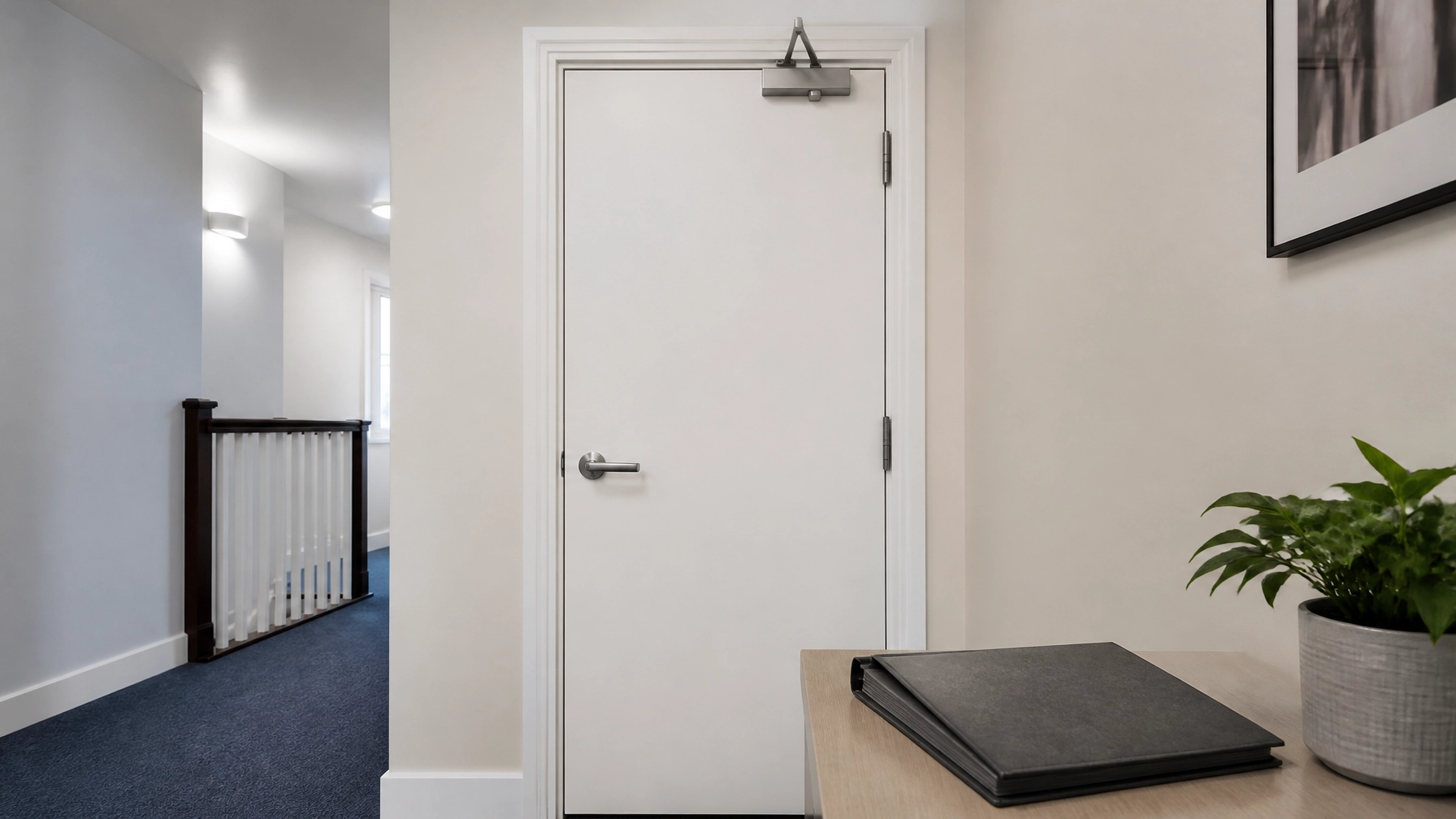
1. Understand Why Fire Door Records Matter
Property management disputes can become more complicated when fire-safety duties, repair records, tenant communications and access arrangements are poorly documented.
A fire door concern does not automatically invalidate an eviction notice, nor does it guarantee a particular legal outcome. However, incomplete records can make it more difficult to demonstrate that you acted responsibly and promptly when a concern was identified.
For landlords and property managers, the practical solution is clear:
- Record fire-safety concerns when they arise.
- Communicate appropriately with residents.
- Arrange professional Fire Door Surveys for Quotations.
- Complete proportionate Fire Door Repairs or upgrades.
- Keep a signed compliance file containing the relevant records.
This approach supports safer buildings, clearer communication and more effective property management.
Key Takeaways
- Fire door responsibilities should be managed as part of the property’s wider fire safety arrangements.
- Good records do not guarantee a legal result, but they help demonstrate what action was taken and when.
- Resident access arrangements should be planned, communicated and recorded.
- Wedged, damaged or poorly closing doors require attention from qualified professionals.
- A structured compliance file supports future maintenance, insurance queries and regulatory discussions.
- Proportionate repair may be possible where a door can be safely restored rather than replaced.
2. Navigate the Legal Responsibilities Carefully
The Regulatory Reform (Fire Safety) Order 2005 remains a central part of fire safety law for relevant premises and shared residential areas. The Fire Safety Act 2021 clarified the treatment of elements such as flat entrance doors within the scope of fire safety responsibilities.
The responsible person must ensure that suitable general fire precautions are in place. Depending on the building, this may include fire-resisting doors, self-closing devices, smoke seals and suitable fire door maintenance arrangements.
The Fire Safety (England) Regulations 2022 also introduce specific duties for certain multi-occupied residential buildings. These include regular checks of communal fire doors and best endeavours to access flat entrance doors at the required intervals.
The exact duties depend on the building’s height, layout, use, fire risk assessment and other circumstances. Landlords should therefore obtain property-specific advice rather than relying on a general online checklist.
Read the official fire door guidance and review the wider recommendations in the RICS guide for landlords.
Avoid Treating Eviction and Fire Safety as Separate Issues
A possession dispute may involve several different matters, including rent, tenancy breaches, access, property condition and communications. Fire door records may become relevant if one party alleges that safety duties were ignored or that access was mishandled.
This does not mean that a fire door issue automatically prevents possession proceedings. It means that landlords should manage safety responsibilities consistently and seek independent legal advice where an eviction dispute arises.
3. Translate an FRA Report into a Clear Action Plan
A Fire Risk Assessment can identify a range of concerns, from damaged doors and ineffective closers to missing documentation or unclear maintenance responsibilities.
An FRA report is not always a physical work schedule. It may use broad recommendations that require translation into specific property actions.
A professional review should establish:
- Which doors require attention.
- Whether the issue relates to the door leaf, frame, hinges, closer, seals, hardware or surrounding structure.
- Whether the door can be proportionately repaired or requires replacement.
- What priority should be assigned to each action.
- What documentation should be retained after the work is complete.
A professional Fire Door Survey for Quotations provides a practical bridge between the FRA report and the work required. It gives the landlord a clearer basis for budgeting, scheduling and communicating with residents.

4. Choose Proportionate Repair or Replacement
Not every failed or damaged fire door requires complete replacement. The correct decision depends on the condition of the door set, the specification, the fire strategy and the findings of a suitably qualified professional.
Where appropriate, a qualified team may be able to:
- Restore damaged edges or lippings.
- Renew suitable intumescent protection.
- Upgrade compatible hardware.
- Address problems with closing and latching.
- Improve the relationship between the door leaf and frame.
- Replace components that no longer perform as required.
Where a door cannot be safely restored, a complete Fire Door Installation may be the more appropriate option.
All work should be completed by qualified professionals and, where required, Certified Installers. Fire door compliance is not suitable for unqualified alterations or informal repairs. Incorrect work can affect fire performance, create further costs and leave the responsible person without reliable evidence of compliance.
Elite Fire Door Installations focuses on a proportionate approach: review the issue, explain the options, provide clear pricing and complete the appropriate repair or upgrade with supporting documentation.
5. Prepare HMO Properties Before Letting
Property investors converting a building into an HMO should include fire door preparation in the renovation budget from the beginning. Delaying this work until the final stage can affect the programme, create access difficulties and increase the risk of unexpected costs.
Before letting rooms, investors should consider:
- The number and position of fire doors required by the FRA and property design.
- The condition of existing door sets.
- The suitability of frames, hinges, closers and intumescent seals.
- The condition of doors serving bedrooms, shared areas and escape routes.
- The need for fire door upgrades or replacement.
- The documentation required for the compliance file.
- Future maintenance and resident communication arrangements.
Doors may need to be specified and installed in accordance with the property’s fire strategy and applicable standards, including BS 476-22 and BS 8214 where relevant.
Apply the Quick Compliance Cheat Sheet
Flats in buildings under 7 storeys and below 18 metres tall may generally be suitable for a specialist, provided they meet FRA, specification, insurer and contract requirements.
This is not a universal exemption. The building’s risk profile, construction, use, management arrangements and professional recommendations must still be considered.
6. Follow a Documented Professional Process
A structured process gives landlords confidence that physical work and record-keeping are being managed together.
Step One: Complete a Survey
A professional survey reviews the relevant fire doors and identifies the work required. The survey should be proportionate to the property and linked to the FRA findings.
Step Two: Issue a Fixed-Price Quotation
The quotation should explain whether the recommendation is repair, upgrade or replacement. It should also identify any assumptions, access requirements and documentation included.
Step Three: Complete the Work Professionally
Qualified professionals use appropriate UK-standard tools and materials, which may include:
- Fire Door Gap Gauges.
- Intumescent Seal Routers.
- Hinge Jigs.
- Fire-Rated Packers.
- Digital Inclinometers.
- Force Gauges.
- Laser Levels.
- Certified Intumescent Mastic/Sealant.
These tools support precision, but their use must remain within a controlled professional process. Landlords and residents should not attempt to replicate technical fire door work themselves.
Step Four: Handover the Signed Compliance File
After completion, retain the relevant quotation, work record, photographs where appropriate, product information, door schedule and signed compliance documentation.
A well-organised file helps future property managers understand what was completed and when further maintenance may be required.

7. Answer Common Questions About Records and Access
Does a fire door problem automatically invalidate an eviction notice?
No. Fire door compliance and possession proceedings involve different legal considerations. A fire door issue does not automatically invalidate an eviction notice or determine the result of a case. Obtain case-specific legal advice from a qualified adviser.
What should I record when a resident refuses access?
Record the proposed dates, notices issued, alternative arrangements offered and the outcome of each contact. Keep communications factual and respectful. If access remains unavailable, seek professional advice about the next appropriate step.
Can residents wedge fire doors open?
Wedging or propping open a fire door can compromise compartmentation and increase risk. Landlords should communicate the importance of keeping fire doors closed and arrange professional advice where a closer or door is not functioning correctly.
Should every damaged fire door be replaced?
Not necessarily. A qualified professional should assess whether proportionate repair, re-lipping, hardware renewal or an upgrade is suitable. Replacement may be necessary where the door set cannot be reliably restored.
What should an HMO compliance file contain?
It may include the FRA, door schedule, survey records, quotations, invoices, photographs, product details, access communications, maintenance records and signed completion documents. The contents should reflect the property and professional recommendations.
8. Protect Your Property with Prompt, Proportionate Action
Good records support good decisions. They help landlords identify outstanding work, demonstrate that concerns were taken seriously and plan future maintenance without unnecessary disruption.
If your property has damaged, wedged or poorly closing fire doors, arrange a professional Fire Door Survey for Quotations before deciding whether repairs or replacement are required.
You can also visit Elite Fire Door Installations to discuss a professional survey, Fire Door Installation, HMO upgrades or compliance documentation.
9. Conclusion
Fire door concerns should be managed promptly, calmly and professionally. They do not automatically decide the outcome of an eviction dispute, but weak records can make wider property management issues harder to resolve.
Landlords and property managers should record concerns, communicate appropriately, arrange professional Surveys, complete proportionate repairs or upgrades and retain a signed compliance file.
This process supports safer residents, clearer responsibilities and stronger long-term maintenance planning. It also gives property owners greater confidence that their fire door arrangements are being managed with the required care and precision.
Note: This information is intended as general guidance and does not constitute professional or legal advice. Always consult a qualified fire safety engineer for your specific property.
Email: info@elitefiredoorinstallations.co.uk
Specialist Support: +44 7514 898517
Request a call back: +44 20 4511 9456
Website: https://elitefiredoorinstallations.co.uk
Leave a Reply