

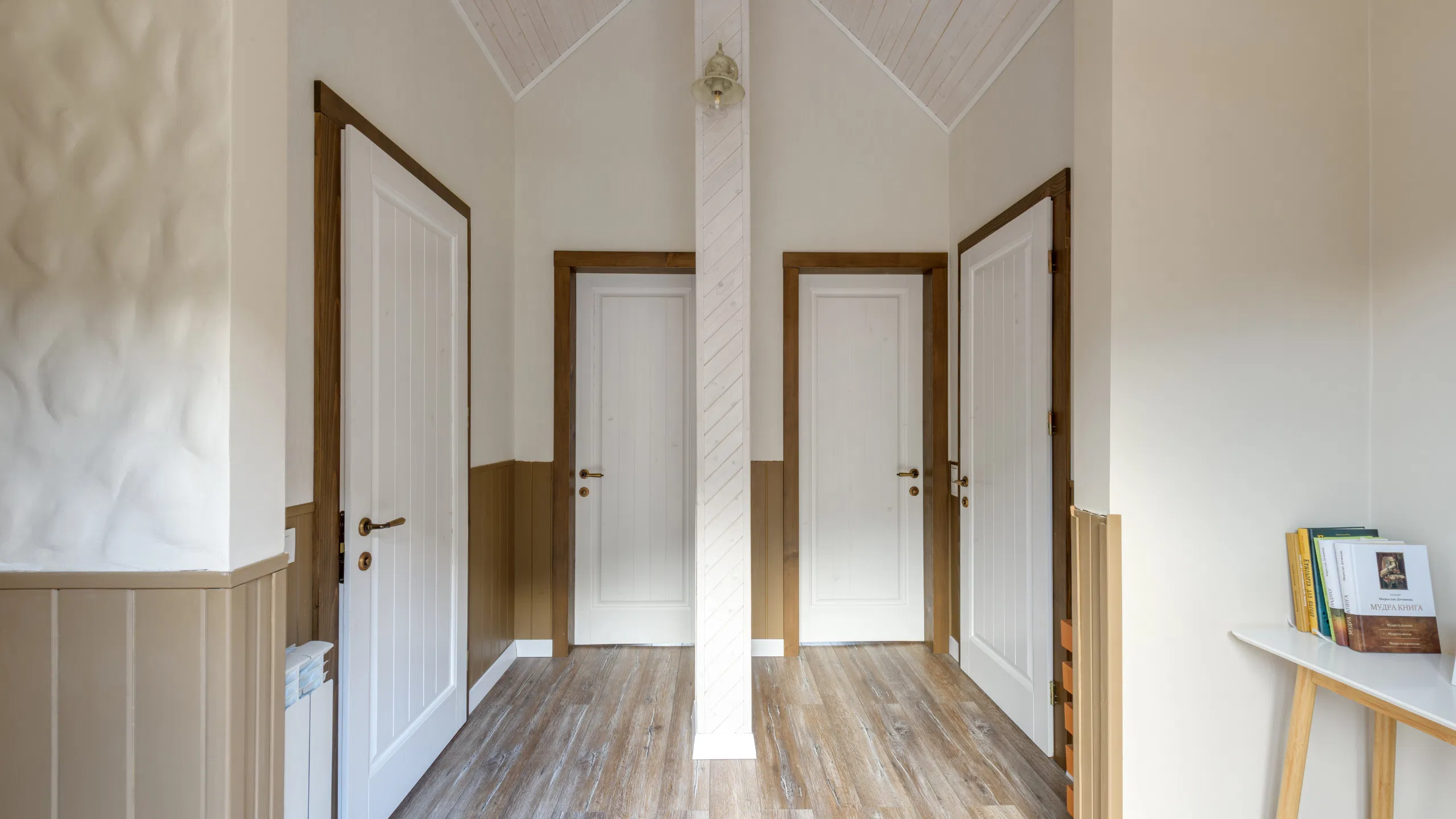
For landlords and property managers operating Houses in Multiple Occupation (HMOs), fire safety is not merely a box-ticking exercise; it is a critical legal obligation. The Regulatory Reform (Fire Safety) Order 2005 places the burden of safety squarely on the “Responsible Person,” and in high-density living environments, fire doors serve as the primary line of defence.
Whether you are managing a portfolio of Victorian conversions in Brighton, Hove, or Portslade, or modern multi-occupancy units in Crawley, Horsham, or Guildford, ensuring your fire doors are compliant is essential to avoid heavy fines: which can exceed £30,000: and, more importantly, to protect the lives of your tenants.
At Elite Fire Door Installations, we specialise in helping landlords across the Sussex Core Area, West Sussex & The Coast, and the Surrey & Greater London corridor navigate these stringent regulations. Below, we outline the seven most common mistakes landlords make with HMO fire door upgrades and how to rectify them.
1. Installing Non-Certified or “Domestic” Doors
One of the most frequent errors is the assumption that any thick, solid timber door will suffice as a fire door. In an HMO, every bedroom door and kitchen door leading to a communal escape route must typically be FD30 rated, meaning it provides at least 30 minutes of fire resistance.
The Fix: Verify Certification Labels
Ensure every door you purchase carries a clear certification label (such as those from BWF-Certifire or BM TRADA). A true fire door is a tested system, not just a slab of wood. If you are upgrading properties in Eastbourne, Bexhill, or Hastings, always demand proof of compliance from your supplier.
2. Neglecting Self-Closing Devices
A fire door is only effective if it is closed when a fire breaks out. Many landlords in areas like Worthing, Shoreham-by-Sea, and Lancing fail inspections because their doors lack working self-closers, or because tenants have tampered with them.
The Fix: Install Heavy-Duty, Controlled Closers
Avoid cheap “perko” or spring-style closers that often fail to overcome the air pressure of a room or the latch’s resistance. Use overhead, controlled self-closing devices that ensure the door latches firmly into the frame from any angle. Regular inspections in high-traffic HMOs in Bognor Regis and Littlehampton are vital to ensure these devices haven’t been disconnected by residents.
3. Omitting Intumescent Strips and Cold Smoke Seals
In a fire, heat causes intumescent strips to expand, sealing the gap between the door and the frame. Without these, and the accompanying cold smoke seals (which prevent lethal smoke inhalation), a fire door’s rating is effectively void.
The Fix: Ensure Continuous Perimeter Seals
Check that all fire doors in your Lewes, Peacehaven, or Newhaven properties have continuous strips recessed into the door head and stiles. If these seals are missing, damaged, or have been painted over, they must be replaced immediately. Professional fire door repairs can restore these critical components without the cost of a full door replacement.
4. Using Incorrect Hardware and Ironmongery
Installing standard domestic hinges or handles on a fire door is a major compliance pitfall. Fire doors are significantly heavier than standard doors; they require at least three fire-rated hinges (typically Grade 13) to prevent the door from warping or dropping under heat.
The Fix: Upgrade to Certified Hardware
All hardware: locks, latches, and hinges: must be CE marked and compatible with the door’s fire rating. Crucially, doors on escape routes (such as those in HMOs in Croydon, Kingston, and Twickenham) must be openable from the inside without the use of a key. This usually requires the installation of thumb-turn locks rather than traditional deadbolts.

5. Failing the “4mm Gap” Rule
Even the highest quality FD30 door will fail if it is poorly installed. A common mistake during refurbishments in Chichester, Arundel, or Midhurst is leaving excessive gaps around the door. If the gap between the door leaf and the frame is greater than 4mm (usually 2mm to 4mm is the target), smoke and fire will bypass the door.
The Fix: Commission Expert Precision Installations
Precision is non-negotiable. At Elite Fire Door Installations, we provide certified installations across the M25 corridor, from Sutton & Merton to Bromley, ensuring that every door is hung with millimetre-perfect clearances. This includes ensuring the threshold gap is kept to a minimum (typically 8mm to 10mm for fire, though smoke seals may require less).
6. Ignoring the Integrity of the Door Frame
Many landlords replace the door “leaf” but leave the original, thin domestic frame in place. A fire door is a complete assembly. If the frame is not fire-rated or is improperly back-filled with flammable expanding foam, the entire installation is compromised.
The Fix: Assess the Full Assembly
When upgrading properties in Guildford, Woking, or Epsom, always check that the frame is of the correct density and depth. Any gaps between the frame and the wall must be filled with intumescent mastic or fire-rated mineral wool: not standard builder’s foam.

7. Lack of Regular Maintenance and Documentation
HMO compliance is not a “set and forget” task. Wear and tear in shared houses can quickly lead to non-compliance. A door that was compliant in January might have a failed closer or a damaged seal by June.
The Fix: Implement a Mandatory Inspection Schedule
Conduct quarterly visual checks and six-monthly detailed inspections. Maintain a logbook of all fire door maintenance. If your local authority in Adur, Worthing, or Arun requests proof of compliance, having a documented audit trail of repairs and certified installations is your best legal protection.
Secure Your Property with Accredited Professionals
Navigating the complexities of HMO fire safety can be daunting for landlords in Royal Tunbridge Wells, Redhill, Reigate, and beyond. Mistakes are costly, but more importantly, they are dangerous.
Elite Fire Door Installations provides a comprehensive service, from initial surveys to certified upgrades and rapid repairs. Our team is accredited by leading safety bodies and approved by local authorities across East and West Sussex.
Discover How We Can Help
- HMO Specialists: We understand the specific licensing requirements for shared housing.
- Certified Precision: Our installations meet BS 476 and BS EN 1634 standards.
- Broad Coverage: We operate daily across Seaford, Hailsham, Crowborough, Uckfield, Haywards Heath, Burgess Hill, and East Grinstead.
Ensure your property is compliant and your tenants are safe. Contact Elite Fire Door Installations today for a professional assessment of your fire doors.
Phone: +44 7514898517
Email: info@elitefiredoorinstallations.co.uk
Website: https://app.elitefiredoorinstallations.co.uk
Leave a Reply