

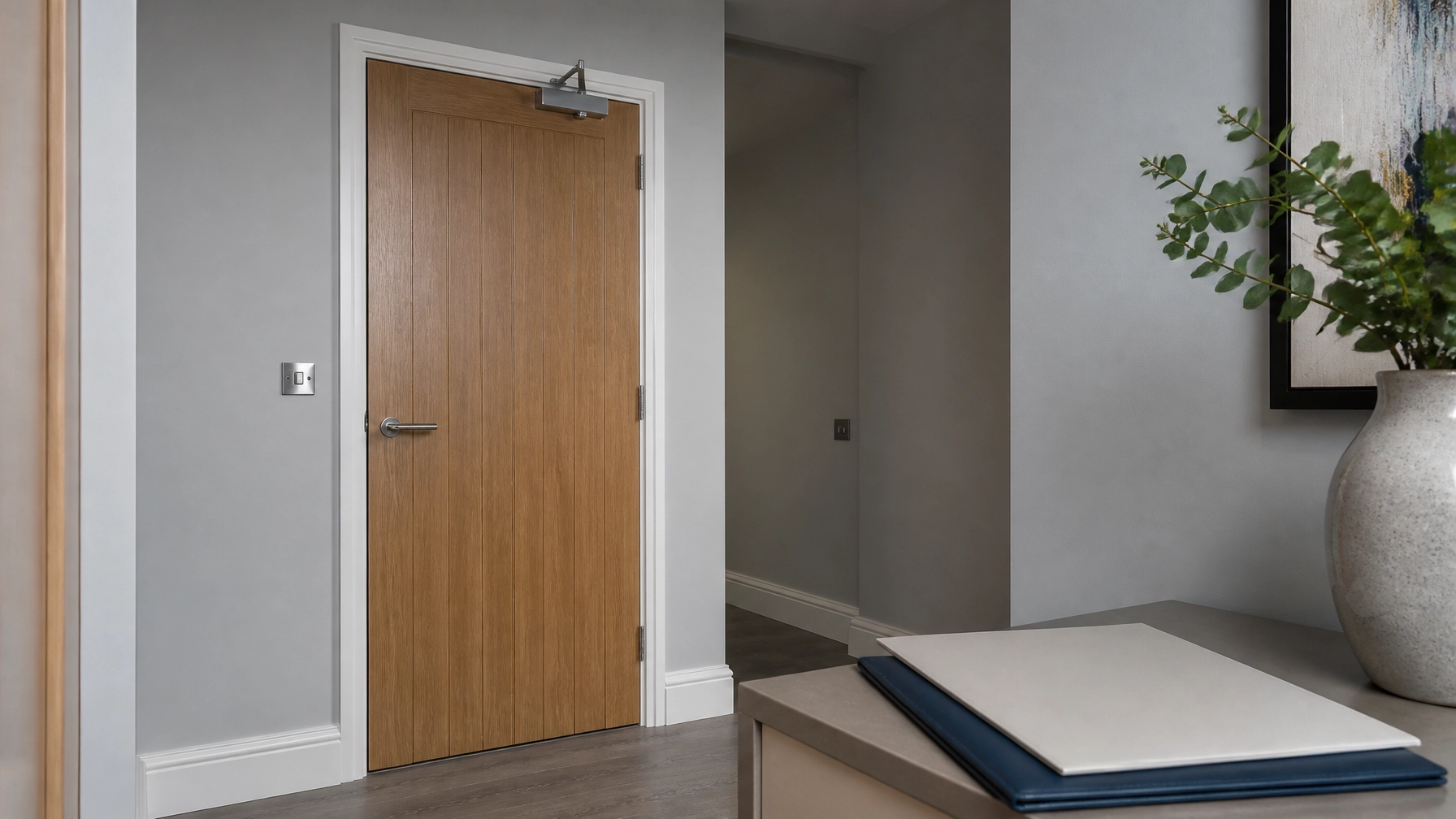
Selling a property after fire-door repairs, upgrades or installation does not automatically prevent the transaction from progressing. However, buyers, conveyancers, managing agents, insurers and lenders may need clear information about the work completed and any outstanding issues.
A well-organised handover gives the buyer confidence, helps the incoming responsible person understand their duties and reduces avoidable questions during the sale.
1. Prepare the Fire Door Handover Before Marketing the Property
Key Takeaways
- Gather the available Fire Risk Assessment, professional survey records and fire-door documentation before responding to buyer enquiries.
- Keep a clear door schedule showing which doors were repaired, upgraded, replaced or newly installed.
- Communicate known defects or outstanding actions accurately through the appropriate professional channels.
- Arrange a professional Fire Door Survey for Quotations where records are incomplete or the current position is unclear.
- Use qualified fire safety professionals and Certified Installers for any remedial work.
- Retain a signed compliance file so the buyer receives a clear record of the property’s fire-door history.
Fire-door information may be relevant to a house, flat, HMO, B&B, guest house, restaurant or mixed-use building. The level of documentation required will depend on the property’s use, layout, fire strategy and the work previously carried out.
Table of Contents
- 1. Prepare the Fire Door Handover Before Marketing the Property
- 2. Explain Why Fire Door Records Matter During a Sale
- 3. Translate the Fire Risk Assessment into a Clear Handover Plan
- 4. Resolve Uncertainty with a Proportionate Professional Solution
- 5. Prepare Different Property Types for Buyer Enquiries
- 6. Follow a Simple Survey-to-Handover Process
- 7. Answer Common Fire-Door Sale Questions
- 8. Complete the Sale Handover with Confidence
- 9. Conclusion: Transfer Fire-Door Information Clearly
2. Explain Why Fire Door Records Matter During a Sale
Fire doors form part of a building’s passive fire protection. Where they protect communal areas, escape routes, sleeping accommodation or separation between different uses, their condition and specification can be relevant to the property’s Fire Risk Assessment.
The Fire Safety Act 2021 clarified the relevance of flat entrance doors and other building elements within the scope of fire safety duties for qualifying multi-occupied residential buildings. The Regulatory Reform (Fire Safety) Order 2005 and the Fire Safety (England) Regulations 2022 may also apply, depending on the property and its use.
This does not mean that every seller must produce an identical set of documents. It means that accurate records should be available where fire doors have been altered or where the building has ongoing fire safety responsibilities.
Share Information Through the Correct Professional Channels
Sellers should avoid informal assurances such as “the doors were dealt with” without supporting information. Instead, provide relevant records to the conveyancer, managing agent, responsible person, buyer’s professional advisers or other authorised parties.
Known issues should be described accurately. If an action remains open, state that clearly. If work has been completed, provide the relevant completion records. If the position is uncertain, arrange a professional review rather than making an assumption.
This approach supports transparency without creating unnecessary alarm.
3. Translate the Fire Risk Assessment into a Clear Handover Plan
A Fire Risk Assessment may identify fire doors by location, purpose, condition or required action. It may also refer to wider matters such as compartmentation, self-closing devices, escape routes and management arrangements.
The FRA should not be treated as a replacement for a detailed fire-door record. Instead, use it as a starting point for organising the information that the buyer and incoming duty-holder may need.
Organise the Essential Fire-Door Documents
A suitable handover file may include:
- The current Fire Risk Assessment and relevant action plan.
- Professional Fire Door Survey records.
- A door schedule identifying locations, door references and intended performance.
- Records of Fire Door Installation, repair, upgrade or replacement work.
- Product information and manufacturer guidance where available.
- Hardware and intumescent seal details.
- Handover documents for completed works.
- Photographic records where they form part of the project file.
- Maintenance history and records of previous remedial actions.
- Details of any outstanding recommendations or follow-up work.
For work involving timber fire doors, the specification and installation should be appropriate to the door assembly and the intended application. Elite Fire Door Installations works with recognised UK standards, including BS 476-22 and BS 8214, as part of a professional compliance-led approach.

4. Resolve Uncertainty with a Proportionate Professional Solution
Incomplete records do not necessarily mean that every fire door must be removed and replaced. Equally, a visually tidy door should not automatically be treated as compliant.
A professional assessment can establish whether the available door leaf, frame, hardware, seals and installation are suitable for the intended use. It can also identify whether proportionate Fire Door Repairs or an upgrade may be appropriate.
Repair, Upgrade or Replace Through Certified Installers
The correct solution may involve:
- Repairing an appropriate existing doorset.
- Re-lipping or upgrading a suitable door where technically justified.
- Improving compatible hardware or seals.
- Replacing a door where its condition, specification or history cannot support continued use.
- Completing a new Fire Door Installation with the required documentation.
These decisions must be made by qualified professionals and completed by Certified Installers. Sellers should not attempt to alter doors, fit hardware or make fire-performance claims themselves. Incorrect work can affect the door assembly and leave the buyer with an unclear or incomplete compliance position.
5. Prepare Different Property Types for Buyer Enquiries
The information needed during a sale depends on the building’s use.
- Houses: Fire-door records may be relevant where internal alterations, a change of use, an annexe or recent building work has introduced fire-resisting doors.
- Flats: The seller may need to coordinate with the freeholder, managing agent or responsible person for records relating to communal areas and flat entrance doors.
- HMOs: Buyers may request the FRA, door schedule, remedial records and evidence that the property is prepared for licensing and ongoing management duties.
- B&Bs and guest houses: Sleeping accommodation, escape routes and separation between guest areas and other parts of the building should be reflected in the available fire safety information.
- Restaurants: Kitchens, storage areas, customer routes and any accommodation above or beside the premises may create additional fire-door requirements.
- Mixed-use buildings: Records should clearly identify which doors serve residential, commercial and shared areas.
Use the Quick Compliance Cheat Sheet
Flats in buildings under seven storeys and below 18 metres tall may generally be suitable for a specialist fire-door provider, provided the arrangement meets the Fire Risk Assessment, specification, insurer and contract requirements.
This is not a blanket exemption or approval. The building’s design, use, fire strategy and professional advice must still be considered. Where responsibilities overlap, sellers should ensure the relevant freeholder, managing agent, responsible person and professional advisers are included in the communication.
6. Follow a Simple Survey-to-Handover Process
A calm, structured process helps sellers deal with fire-door questions without delaying the wider transaction.
Step One: Gather Existing Information
Collect the FRA, survey records, door schedules, completion documents, product information, maintenance history and correspondence relating to previous work.
Separate confirmed records from missing information. Do not fill gaps with assumptions.
Step Two: Arrange a Professional Survey
Where the records are incomplete, arrange a professional Fire Door Survey for Quotations. This creates a current evidence base and helps identify whether further action is required.
The survey should be undertaken by a qualified professional. Sellers should not rely on an informal visual review or an unqualified opinion.
Step Three: Clarify the Scope
Ask for the findings to be explained in clear terms. Confirm which doors are included, what action is recommended and whether the work relates to repair, upgrade, replacement or documentation.
Where appropriate, the scope should refer to the relevant performance requirements and standards, including BS 476-22 and BS 8214.
Step Four: Complete Suitable Work
If work is required, appoint Certified Installers to complete the agreed scope. This may involve HMO fire door upgrades, repairs or new installations.
The work should be completed with suitable precision and without creating an unexplained gap between the survey findings and the final records.
Step Five: Retain the Signed Compliance File
Keep the completed documentation together. The file should make it easy for the buyer and the incoming responsible person to understand:
- What was surveyed.
- What work was authorised.
- What work was completed.
- Which doors the records relate to.
- What maintenance or future review arrangements apply.
- Whether any actions remain outstanding.

7. Answer Common Fire-Door Sale Questions
Does a fire-door issue automatically stop a sale?
No. A fire-door question does not automatically stop a sale. The effect will depend on the issue, the property type, the buyer’s requirements, the lender’s position and the advice of the relevant conveyancing and fire safety professionals.
Clear records and a proportionate action plan often make the position easier to understand.
What should a seller provide for a flat?
Where available, provide records for the flat entrance door and coordinate with the freeholder or managing agent regarding communal fire-door information. The seller should not make claims about the whole building unless authorised to do so.
What if previous fire-door work has no complete paperwork?
Arrange a professional Fire Door Survey for Quotations to establish the current position. A qualified provider can explain what evidence is available and whether suitable remedial or replacement work is required.
Should outstanding defects be disclosed?
Known defects and open actions should be communicated accurately through the seller’s conveyancer and other appropriate professional channels. Avoid hiding an issue or describing incomplete work as finished.
Can all fire-door work be completed before exchange?
Timing depends on access, scope, materials, property use and the availability of qualified professionals. Start the process early and obtain clear written information about the survey, proposed work and handover records.
8. Complete the Sale Handover with Confidence
Once suitable work is complete, provide the buyer’s authorised professional contacts with the relevant compliance file. A general call to action for owners arranging a professional survey or installation is available through the Elite Fire Door Installations website.
The aim is not to create unnecessary paperwork. It is to provide a reliable trail showing how fire-door changes were identified, addressed and recorded.
9. Conclusion: Transfer Fire-Door Information Clearly
Fire-door repairs, upgrades and installations should remain part of the property record after the work is complete. During a sale, sellers can support a smoother handover by gathering the Fire Risk Assessment, professional survey records, door schedule, product information and maintenance history.
If information is missing, arrange a professional survey. If work is required, use Certified Installers. If a defect remains open, communicate it accurately through the proper professional channels.
Fire-door questions do not automatically stop a sale. A clear, proportionate and well-documented process gives buyers, sellers and incoming responsible persons a more reliable basis for moving forward.
Note: This information is intended as general guidance and does not constitute professional or legal advice. Always consult a qualified fire safety engineer for your specific property.
Email: info@elitefiredoorinstallations.co.uk
Specialist Support: +44 7514 898517
Request a call back: +44 20 4511 9456
Website: https://elitefiredoorinstallations.co.uk
Leave a Reply