

Table of Contents
- 1. Protect the Complete Doorset
- 2. Understand the Legal and Safety Requirements
- 3. Translate Your FRA Report into Action
- 4. Choose a Proportionate Repair or Upgrade
- 5. Prepare Your Property Before Letting or Selling
- 6. Follow a Controlled Professional Process
- 7. Answer Common Questions
- 8. Request Professional Support
- 9. Conclusion
Protect the Complete Doorset
Soundproofing improvements can make a property more comfortable. They may reduce noise between flats, bedrooms, communal corridors, guest rooms, restaurants and residential areas. However, acoustic improvement does not automatically make a fire door compliant.
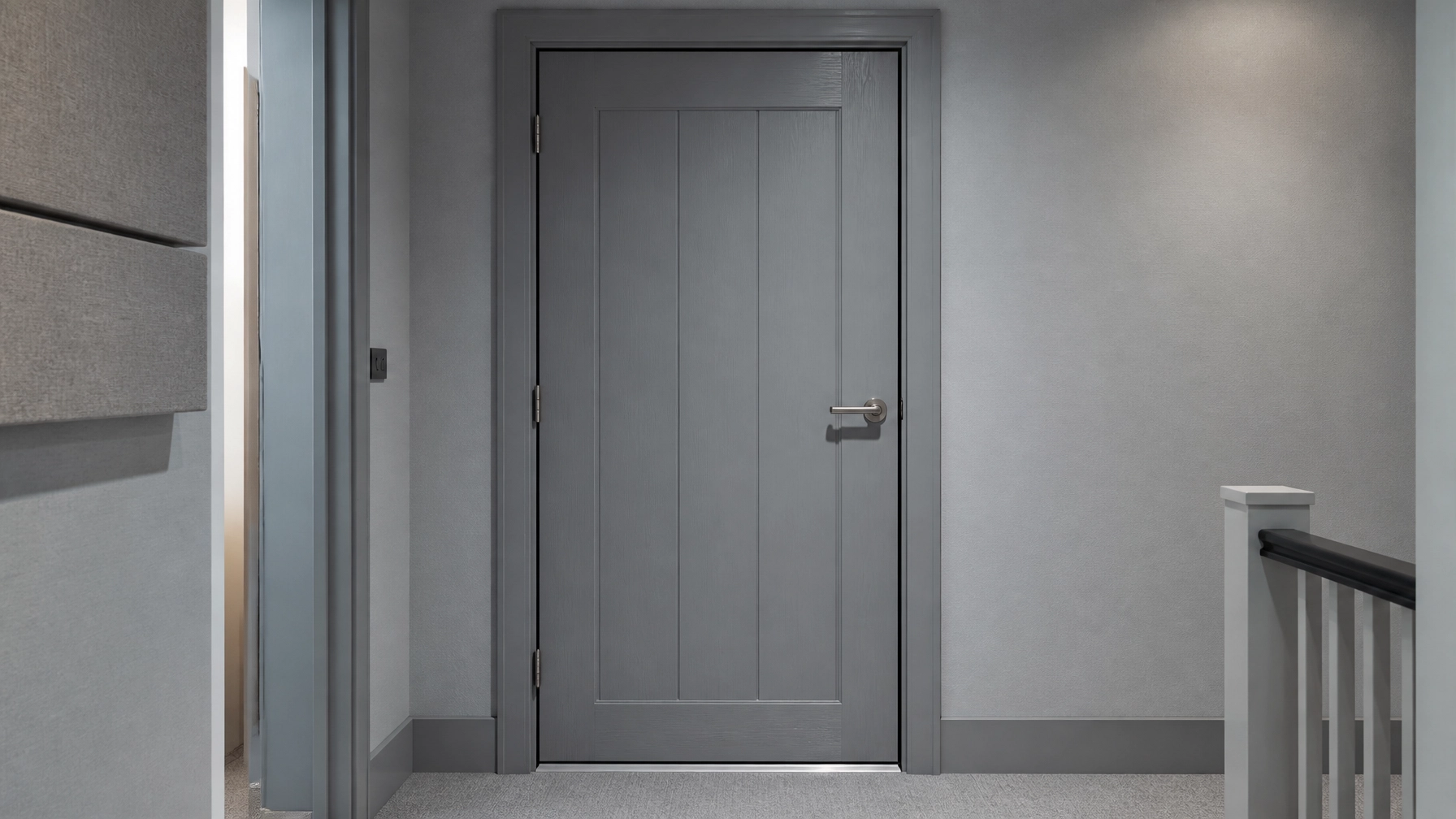
A fire-rated doorset must be considered as a complete system. This includes the door leaf, frame, hinges, locks, self-closing device, intumescent seals, smoke seals, glazing, letterplate, threshold and the surrounding building interface. Changes to one component can affect the performance of the entire assembly.
This is particularly important for landlords, HMO investors, flat owners, B&B operators, restaurant owners, property managers and people preparing a property for sale. A well-intentioned refurbishment can create questions during a Fire Risk Assessment (FRA), buyer’s survey or property management review.
Key Takeaways
- Treat fire and acoustic performance as separate requirements that must work together.
- Do not assume that thicker seals, new floor coverings or additional hardware will improve compliance.
- Ensure all alterations are supported by suitable doorset evidence and completed by qualified professionals.
- Arrange a professional Fire Door Survey for Quotations before refurbishing or changing a doorset.
- Keep a signed compliance file to support future lettings, sales, licensing reviews and property management records.
Understand the Legal and Safety Requirements
Fire doors support the safe separation of areas and help limit the movement of fire and smoke. In England, fire safety duties are influenced by the Regulatory Reform (Fire Safety) Order 2005, the Fire Safety (England) Regulations 2022 and the relevant building regulations.
Fire performance and sound insulation are related but separate matters. Approved Document B addresses fire safety, while Approved Document E addresses resistance to the passage of sound.
A doorset may have acoustic properties without having the required fire performance. Equally, a fire door may not provide the acoustic rating needed for a particular location. The correct outcome depends on the complete doorset specification, the building’s use and the findings of the FRA.
Control Alterations Before They Create Problems
Common changes that require professional consideration include:
- Replacing intumescent, smoke or acoustic seals.
- Adding or changing a threshold or drop seal.
- Installing new carpet, vinyl, laminate or raised floor coverings.
- Fitting a letterplate to a flat entrance door.
- Replacing locks, latches, hinges or closers.
- Adding or enlarging glazing.
- Applying decorative finishes, laminates, panelling or heavy coatings.
- Altering the frame, lining, architrave or surrounding wall.
A change that improves sound reduction may alter the door’s closing action, clearances, heat response or smoke control. A decorative finish may change the surface characteristics of the leaf. A new letterplate or glazing panel may affect the integrity of the door.
These matters should not be resolved through trial and error. A qualified FRA assessor and Certified Installer should establish whether the existing doorset can remain, be repaired or requires a controlled upgrade.
Translate Your FRA Report into Action
An FRA report may identify concerns using terms such as inadequate fire resistance, damaged seals, unsuitable hardware, excessive wear, poor closing performance or uncertainty about the doorset specification.
The report is not simply a list of isolated defects. It provides the basis for a physical action plan. Elite Fire Door Installations can review the available information and relate it to the actual doorset, its location and the building’s use.
This process may involve:
- Reviewing the FRA findings and any existing doorset records.
- Identifying whether acoustic work has already altered the door.
- Considering the effect of floor coverings, thresholds and seals.
- Checking whether glazing, letterplates and hardware are appropriate.
- Establishing whether the door can be repaired, re-lipped or upgraded.
- Recording the completed work within a signed compliance file.
The objective is a clear, proportionate response that supports fire safety without unnecessary disruption.
Choose a Proportionate Repair or Upgrade
Replacing every door is not always the correct solution. Some doorsets can be restored through carefully controlled Fire Door Repairs, subject to their condition, specification and the professional assessment.
Where appropriate, a Certified Installer may be able to address issues involving:
- Damaged or unsuitable seals.
- Worn or incompatible ironmongery.
- Door edge or frame defects.
- Poor alignment or closing performance.
- Threshold and floor interface concerns.
- Inappropriate decorative treatments.
- Missing compliance records.
Any repair, re-lipping or upgrade must remain consistent with the available technical evidence. Work should follow the principles of BS 8214 and the relevant fire performance requirements, including BS 476-22 where applicable.

Improving acoustic performance should therefore be treated as part of a wider doorset review. Additional sealing may support privacy, but it cannot compensate for an unsuitable leaf, frame, lock, glazing system or self-closing arrangement.
Prepare Your Property Before Letting or Selling
Property owners should consider fire doors early in any refurbishment, HMO conversion, sale preparation or change of use.
HMO investors should include doorset reviews before finalising layouts or appointing other trades. New floor finishes, bedroom layouts, locks, entrance doors and decorative schemes can all affect the final compliance position.
Flat owners and property managers should obtain agreement before changing a communal or flat entrance doorset. Government guidance confirms that alterations to flat entrance doors should be undertaken with the knowledge of the Responsible Person, so the change does not negatively affect the building’s FRA.
B&B and guest house operators should consider bedroom, stairway, corridor and service-area doors as part of the overall fire strategy. Restaurant owners should also consider doors separating public areas, kitchens, storage areas and residential accommodation above.
People selling houses should be prepared for buyer questions where a fire door has been modified during refurbishment. Clear records can help demonstrate that the work was considered and completed professionally.
Use the Quick Compliance Cheat Sheet
- Arrange a professional survey before changing seals, thresholds, glazing, locks or finishes.
- Keep the doorset specification, manufacturer information and previous compliance records.
- Confirm that acoustic improvements do not compromise fire performance or self-closing operation.
- Record any refurbishment work affecting doors, frames, floors or hardware.
- For flats in buildings under 7 storeys and below 18 metres tall, specialist support may generally be suitable, provided the property meets FRA, specification, insurer and contract requirements.
- Obtain a signed compliance file before letting, selling or completing an HMO licensing process.
Follow a Controlled Professional Process
Elite Fire Door Installations follows a structured process for landlords, investors and property managers.
Step One: Complete a Survey
We begin with a professional Fire Door Survey for Quotations. This considers the doorset as a complete system rather than focusing on one seal, lock or floor covering in isolation.
The review considers the FRA information, building use, doorset condition and the proposed acoustic or decorative changes.
Step Two: Provide Clear Quotation Information
The findings are translated into a clear written scope. This identifies whether the appropriate solution is a Fire Door Installation, repair, re-lipping, hardware upgrade or further technical review.
This approach helps clients understand the required work before alterations begin.
Step Three: Complete Certified Work
Qualified Certified Installers carry out approved works using appropriate professional equipment and materials. Depending on the project, this may include Fire Door Gap Gauges, Intumescent Seal Routers, Hinge Jigs, Fire-Rated Packers, Digital Inclinometers, Force Gauges, Laser Levels and certified Intumescent Mastic/Sealant.
These tools support precision, but equipment alone does not establish compliance. The installer’s knowledge, the doorset evidence and the completed documentation are equally important.
Step Four: Provide the Compliance File
At handover, clients receive relevant records for their property file. These may include the completed scope, photographs, product information, survey findings and signed compliance documentation.
A clear file can support future FRA reviews, buyer enquiries, HMO licensing discussions, insurer requirements and property management decisions.
Answer Common Questions
Can acoustic seals be added to any fire door?
No. Acoustic seals must be compatible with the specific doorset and its fire performance evidence. A qualified professional must determine whether the proposed arrangement is suitable. Acoustic improvement alone does not establish fire compliance.
Can a new floor covering affect a fire doorset?
Yes. A new carpet, vinyl, laminate or raised floor can alter the relationship between the door leaf and threshold. It may also affect closing performance or the operation of an approved seal. Arrange a professional survey before changing the floor finish around a fire door.
Can I replace a letterplate or lock to improve security and sound insulation?
Not without professional confirmation. Letterplates, locks and other hardware form part of the doorset system. The proposed replacement must be appropriate for the door’s fire and acoustic requirements and installed by a Certified Installer.
Does glazing reduce a fire door’s acoustic performance?
It can. The glass, frame, aperture and door leaf must work together as a tested configuration. Adding new glazing or changing an existing panel may affect both sound insulation and fire resistance. A qualified professional should assess the complete assembly.
Will repainting or decorative panelling invalidate a fire door?
It may, depending on the finish, thickness, location and effect on seals, clearances and the doorset specification. Decorative work should be reviewed by a qualified professional before it is applied. Do not treat a fire door as an ordinary internal door.
Request Professional Support
If sound transmission, refurbishment or buyer-survey concerns have raised questions about your fire doors, arrange a professional review before making alterations.
Elite Fire Door Installations provides tailored Fire Door Installation, repair and compliance documentation services for property owners, landlords, HMO investors, flat owners, B&B operators, restaurant owners and property managers across East Sussex and the wider South East.
You can also book a professional survey or installation through the Elite Fire Door Installations website. A calm, evidence-led review can help you protect the doorset, support legal adherence and maintain confidence during future property decisions.
Conclusion
Soundproofing and fire safety should be considered together, but they are not interchangeable. A seal, threshold, floor covering, letterplate, glazing panel, lock or decorative finish can affect the complete doorset.
The safest approach is to arrange a professional survey, review the available specification and choose a proportionate repair, upgrade or replacement solution. By using qualified FRA assessors and Certified Installers, property owners can address acoustic concerns without losing sight of fire performance, regulatory duties and the need for reliable compliance records.
Note: This information is intended as general guidance and does not constitute professional or legal advice. Always consult a qualified fire safety engineer for your specific property.
Email: info@elitefiredoorinstallations.co.uk
Specialist Support: +44 7514 898517
Request a call back: +44 20 4511 9456
Website: https://elitefiredoorinstallations.co.uk
Leave a Reply